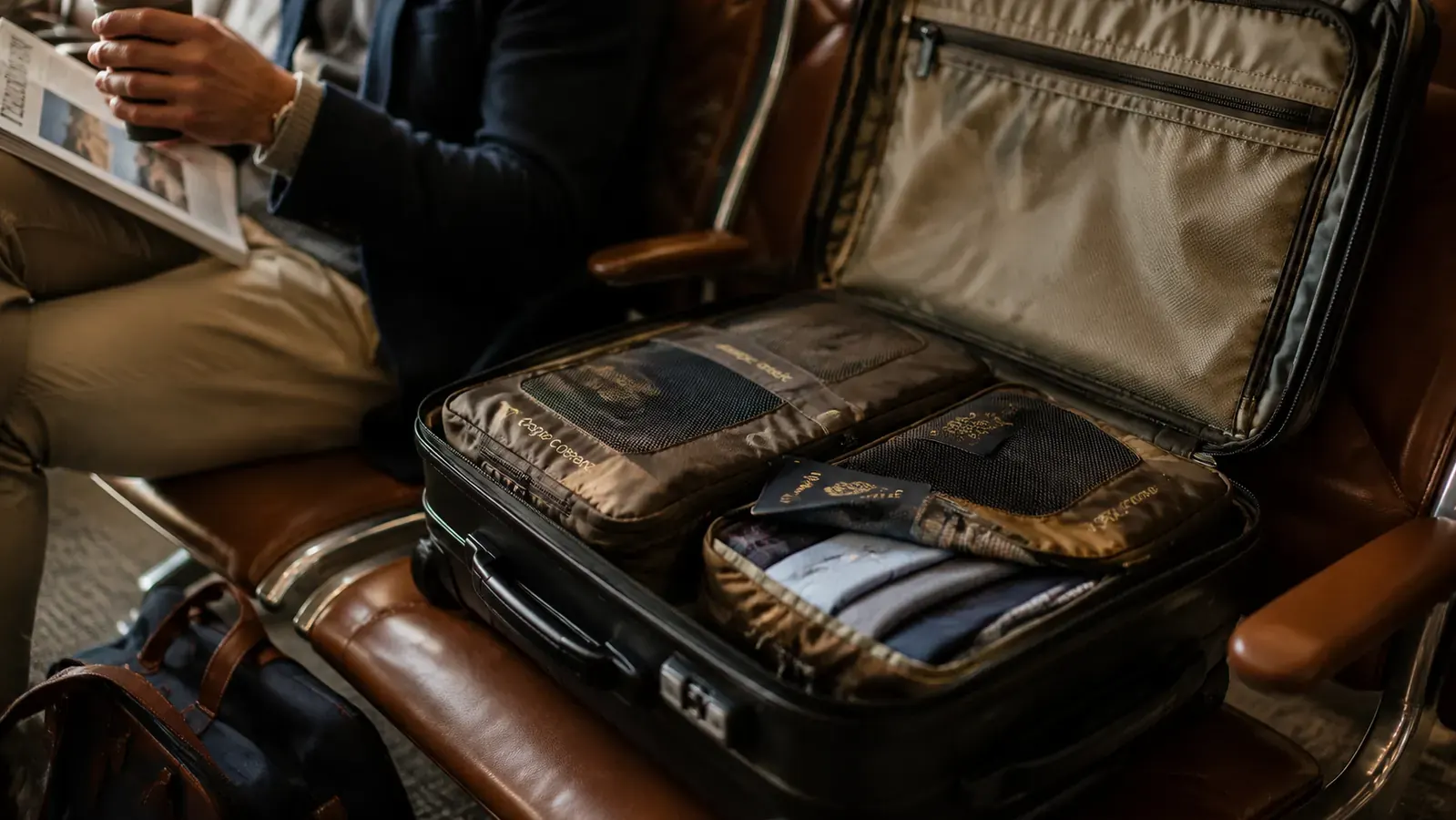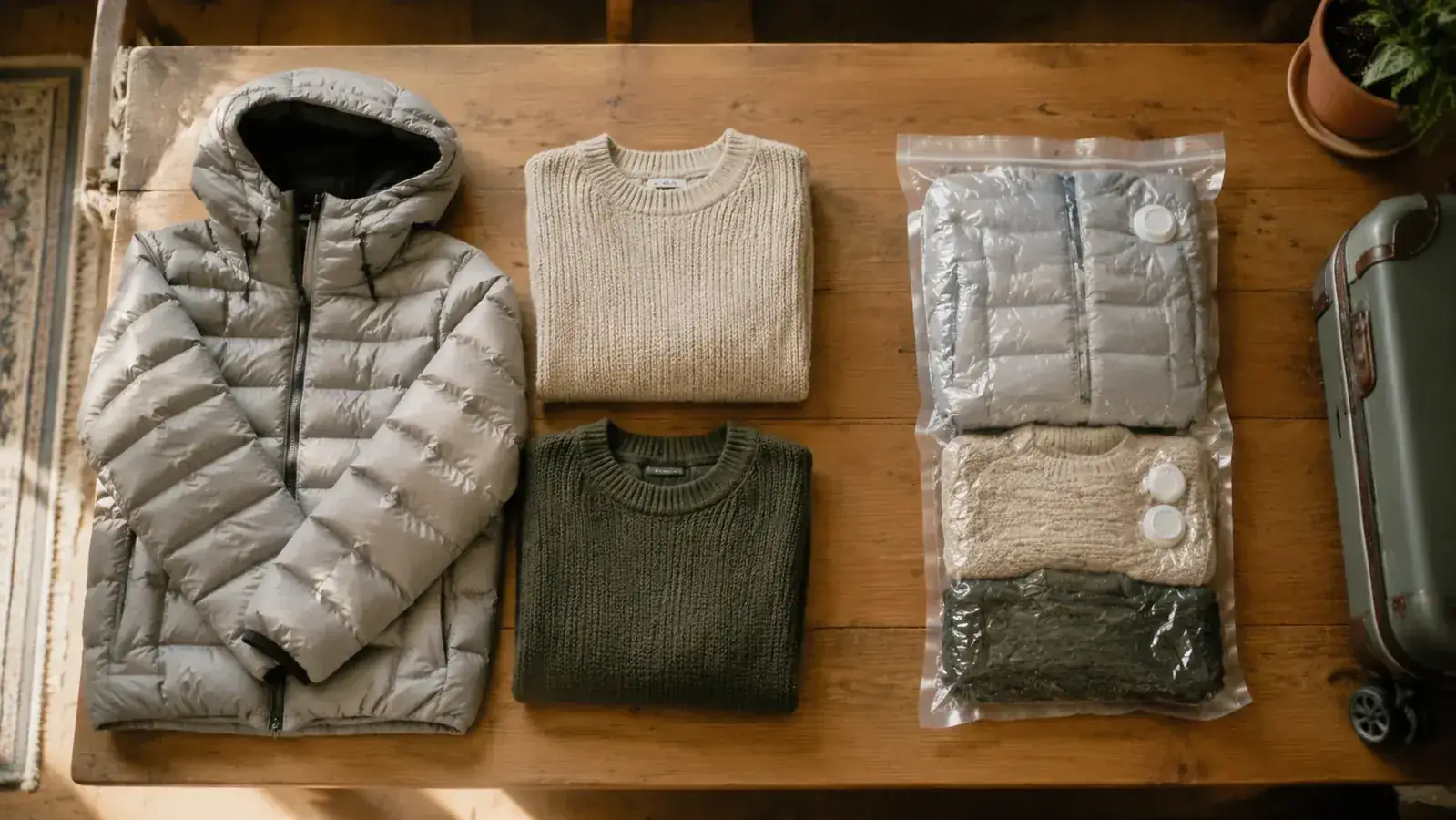
I want to settle this once and for all, because I have seen both sides of this argument play out inside actual carry-on suitcases at actual airports. Compression packing cubes are the darling of every travel influencer. Vacuum storage bags are the thing your mother used for closet storage and you dismissed as overkill. I used to be in that camp. Then I booked a two-week trip to Iceland in November and tried to carry on a down parka, two sweaters, and a thermal base layer alongside my usual kit. The cubes did not solve it. The Amazon Basics vacuum bags did.
Here is what I am not saying: compression cubes are bad. They are genuinely excellent tools for a large category of carry-on trips. But the internet has mostly compared these two methods on identical terms, as if the same traveler with the same bag should pick one over the other. That framing misses the point. These tools solve different problems, and knowing which problem you actually have determines which one belongs in your bag. I will be direct about who wins each scenario, and where each one falls apart.
| Price | Amazon Basics Vacuum Bags (~$10 for a set) | Eagle Creek Pack-It Compression (~$40-65 per set) |
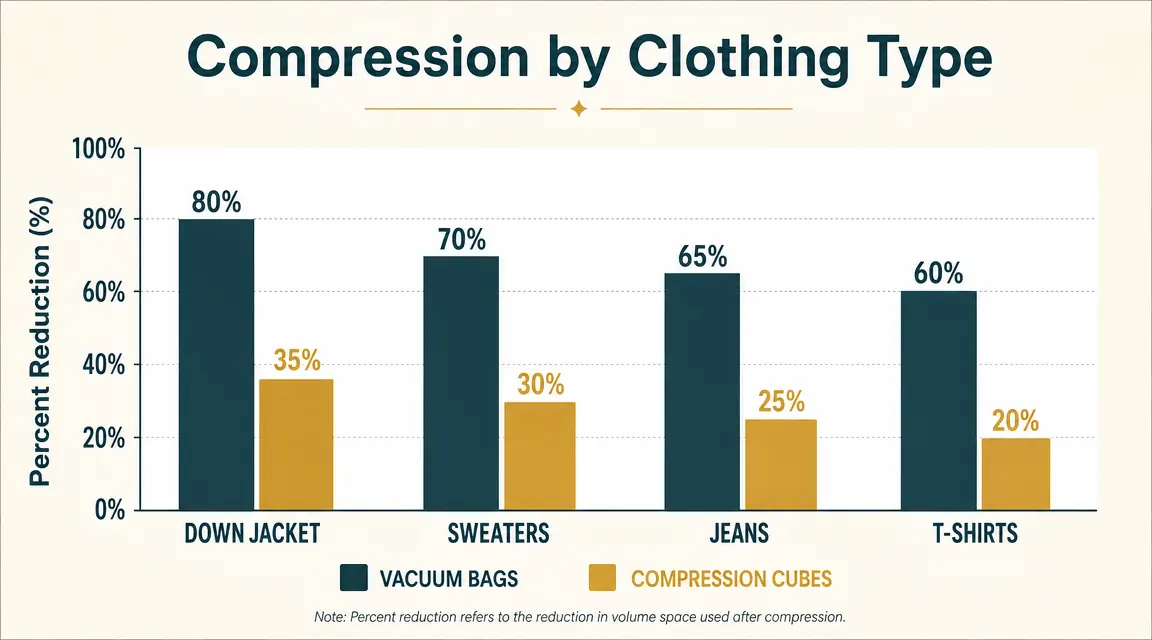
| Compression ratio (bulky items) | 60-80% volume reduction on down jackets, sweaters, fleece | 20-35% volume reduction on the same items |
| Requires equipment to compress | Roll-up method, no pump or vacuum needed | No pump, no vacuum, just zip and compress panel |
| In-hotel organization | Poor: one flat slab per bag, not categorized | Excellent: individual cubes by category, stack neatly in drawers |
| Wrinkle protection | None: items are compressed flat, wrinkles set in | Good: items stay layered, lighter compression keeps shape |
| Best clothing type | Bulky: down jackets, sweaters, hoodies, thermal layers, swimwear | Light to medium: t-shirts, blouses, chinos, underwear, socks |
| Overhead bin durability | Bags hold seal reliably when packed in a suitcase (not loose) | Fully structured, handles any overhead bin stress with no seal risk |
| Reusability | Reusable with proper care; double zip seal holds through 10+ uses in testing | Built to last years, machine washable |
| TSA inspection recovery | If TSA opens a bag and does not reseal it, compression is lost for the return trip | No compression lost from TSA search, just re-zip |
Where Amazon Basics Vacuum Bags Win
The number that changes the conversation is compression ratio on bulky items. I packed a Patagonia Down Sweater Hoody and two merino crew-neck sweaters into a medium Amazon Basics vacuum bag, rolled the seal closed, and sat the result inside my Travelpro Maxlite 5 carry-on. The three items went from occupying roughly half the suitcase to a flat slab about the size of a thick magazine. That is not a metaphor. I measured. Pre-compression, the parka alone stood about 7 inches tall when folded. Post-compression, the whole bag sat under 2 inches thick. If you have ever stood at a gate with a bag that will not close because of one coat, you understand why this matters.
This is exactly the problem compression cubes cannot solve at the same scale. I use Eagle Creek Pack-It Compression cubes regularly for shorter warm-weather trips. The compression panel on the Eagle Creek is well-made and gives real pressure when you zip it shut. On t-shirts and mid-weight chinos it makes a tangible difference. But on a down jacket, the fill just pushes back. The cube compresses maybe 30% on a good day. The vacuum bag compresses 75%. For a 2-week cold-weather trip or a ski weekend, there is no version of this where compression cubes win on raw volume savings.
The Amazon Basics bags also win on price in a way that matters when you are buying enough bags to pack a full suitcase. The set I use most often comes with a mix of medium and large bags for around $10. A comparable-volume set of Eagle Creek compression cubes would run $40 to $65 depending on the size configuration. If you are building a packing system from scratch, that gap is real money. The Amazon Basics bags are not luxury products and they do not pretend to be. They are tools. The double zip seal has held through more than a year of trips without a failure on my watch, which is all I actually need.
If you are packing a coat, two sweaters, or anything puffy into a carry-on, this is the fix.
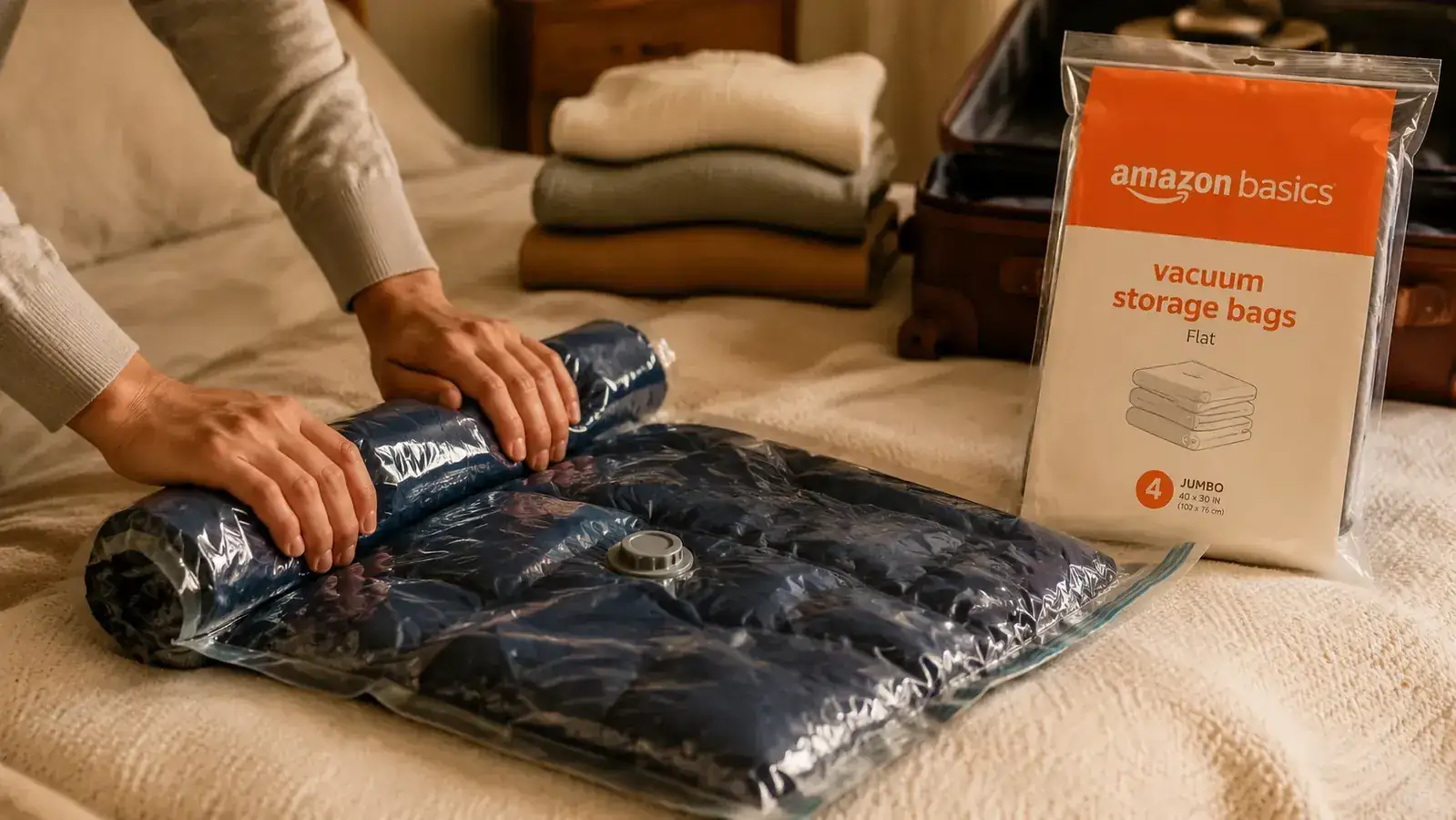
The Amazon Basics vacuum bag set runs around $10 and comes in a medium/large mix. No pump required. Roll the sealed bag from the bottom and the air evacuates through the valve. The compression ratio on bulky fabrics is the best I have tested at any price point.
Amazon Check Today's Price on Amazon →Where Compression Packing Cubes Win
Here is where I have to be honest, because the internet version of this argument tends to just crown vacuum bags and move on. Compression cubes are better in three real scenarios, and if your trip falls into any of them, you should probably use cubes instead. The first is organization. When I land at a hotel after an overnight red-eye, I do not want to unpack a vacuum bag to find one pair of socks. Compression cubes are categorized. Tops in one cube, bottoms in another, underwear and socks in a third. When I need something, I unzip the relevant cube and pull it out. Vacuum bags are a single undifferentiated slab. There is no quick-access version of a vacuum bag.
The second scenario where cubes win is wrinkle-sensitive clothing. A silk blouse, a dress shirt, a blazer for a client dinner: these items do not belong in a vacuum bag. The compression is too aggressive and the fabric has nowhere to breathe. Compression cubes hold clothes in a flatter stack with less pressure, which is meaningfully gentler on anything you need to wear without steaming first. The third scenario is trip length and climate. On a four-day warm-weather trip where everything packs light, compression cubes are faster, cleaner, and more than sufficient. You do not need vacuum bags to fit a summer wardrobe into a carry-on. You need them when your clothing is the problem, and for most warm-weather packing it is not.
Compression cubes won every category except the one that actually matters when your coat will not fit: raw compression on bulky fabric. On that test it was not even close.
The TSA Problem Nobody Warns You About
This is the one genuine downside of vacuum bags that I wish more reviews said clearly. If TSA opens your bag and does not reseal it properly, all your compression is gone by the time you get to the other side of security. On domestic flights this is a moderate risk. On international returns, where secondary screening is common, it is a real consideration. I have had it happen once on a return from London Heathrow. The bag was opened, inspected, and resealed loosely enough that it had re-inflated by the time I got to the gate. My suitcase no longer closed properly and I had to re-compress everything standing at the baggage carousel.
The practical solution is to pack your vacuum bags inside your suitcase rather than making them the structural outer layer of your packing. If TSA screens your bag from the outside and does not need to open individual contents, you are fine. The deeper issue is this: compression packing cubes are immune to this problem entirely. TSA can inspect a cube, rezip it, and you lose nothing. If you travel internationally frequently through airports with aggressive secondary screening, that durability is worth factoring in. I have not stopped using vacuum bags because of this, but I pack them toward the center of my suitcase now instead of the top.
Who Should Use Vacuum Bags
You should use the Amazon Basics vacuum bags if: you are packing for cold weather and you cannot leave the coat at home. You are doing a two-week trip into a single carry-on and the math does not work without serious compression on bulky items. You are packing for a ski weekend, a shoulder-season city trip, or anything that involves down or fleece in real quantity. You are on a budget and you need the best compression-per-dollar you can get. You have a hot tub or swimming situation where packing wet swimwear without it soaking everything else matters. Sealed vacuum bags are the only carry-on solution I have found for wet swimwear that does not ruin your whole suitcase.
Who Should Use Compression Cubes Instead
Use compression cubes if: you are doing a four to seven day warm-weather trip where light fabrics are the majority of your pack. You care about arriving with clothes that do not need steaming. You want to be able to find a specific item without unpacking everything at the hotel. You travel internationally often through high-screening airports and cannot afford to lose compression on a return trip. You are building a long-term packing system you want to use for years and wrinkle-free arrival matters consistently. For this traveler, Eagle Creek Pack-It Compression cubes are genuinely excellent and worth the price premium over budget alternatives. They are not the right tool for a winter coat. For everything else they come very close to being the right tool.
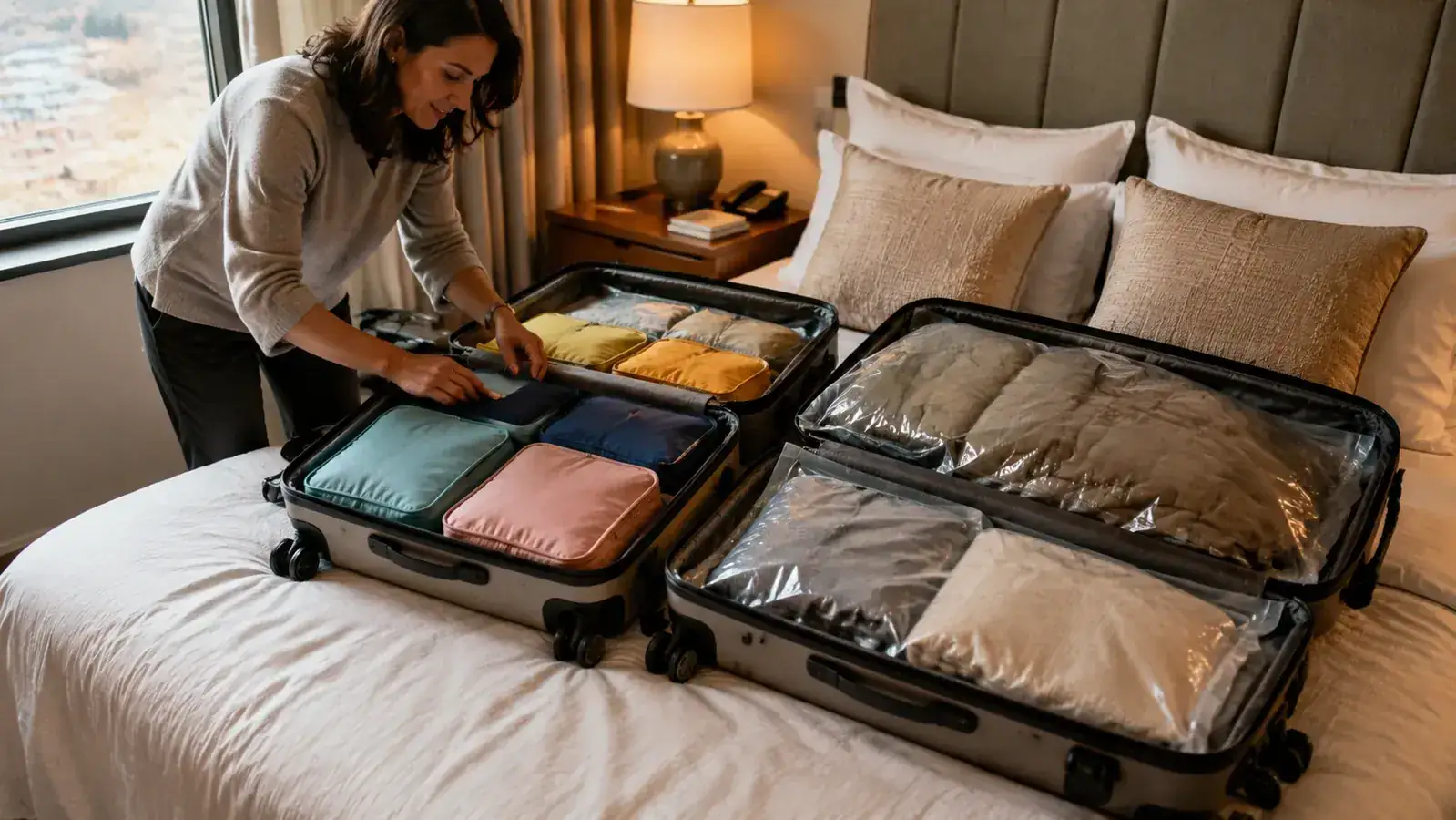
The version of this question I hear most often is: can I use both? Yes, and I often do. On longer cold-weather trips I use a large Amazon Basics vacuum bag for the coat and a second medium bag for sweaters, then fill the remaining structure of the suitcase with Eagle Creek cubes for the lighter layers. The two systems are compatible and they complement each other well. You do not have to choose one religion. Choose based on what you are actually packing.
The Bottom Line on Compression
After testing both methods over multiple trips across winter and summer destinations, the answer to which one saves more space in a carry-on is: it depends entirely on what you are packing. For light to medium fabrics on trips up to a week, compression cubes win on convenience, organization, and wrinkle protection. For anything bulky, anything puffy, or any cold-weather trip where the coat has to come along, vacuum bags win by a margin that is not even close. The Amazon Basics bags in particular offer that compression level at a price that makes the decision easy. At $10 for a set that handles my most space-challenged trips of the year, I keep a stock of them. They are not glamorous. They work.
Bottom line: if bulky clothes are the reason you nearly had to check a bag, this is the solution.
Amazon Basics vacuum storage bags have nearly 90,000 reviews on Amazon and a 4.4-star average for a reason. The roll-up valve works without a pump, the double zip seal holds, and they make cold-weather carry-on travel viable. Check the current price and size options before your next cold-weather booking.
Amazon Check Today's Price on Amazon →