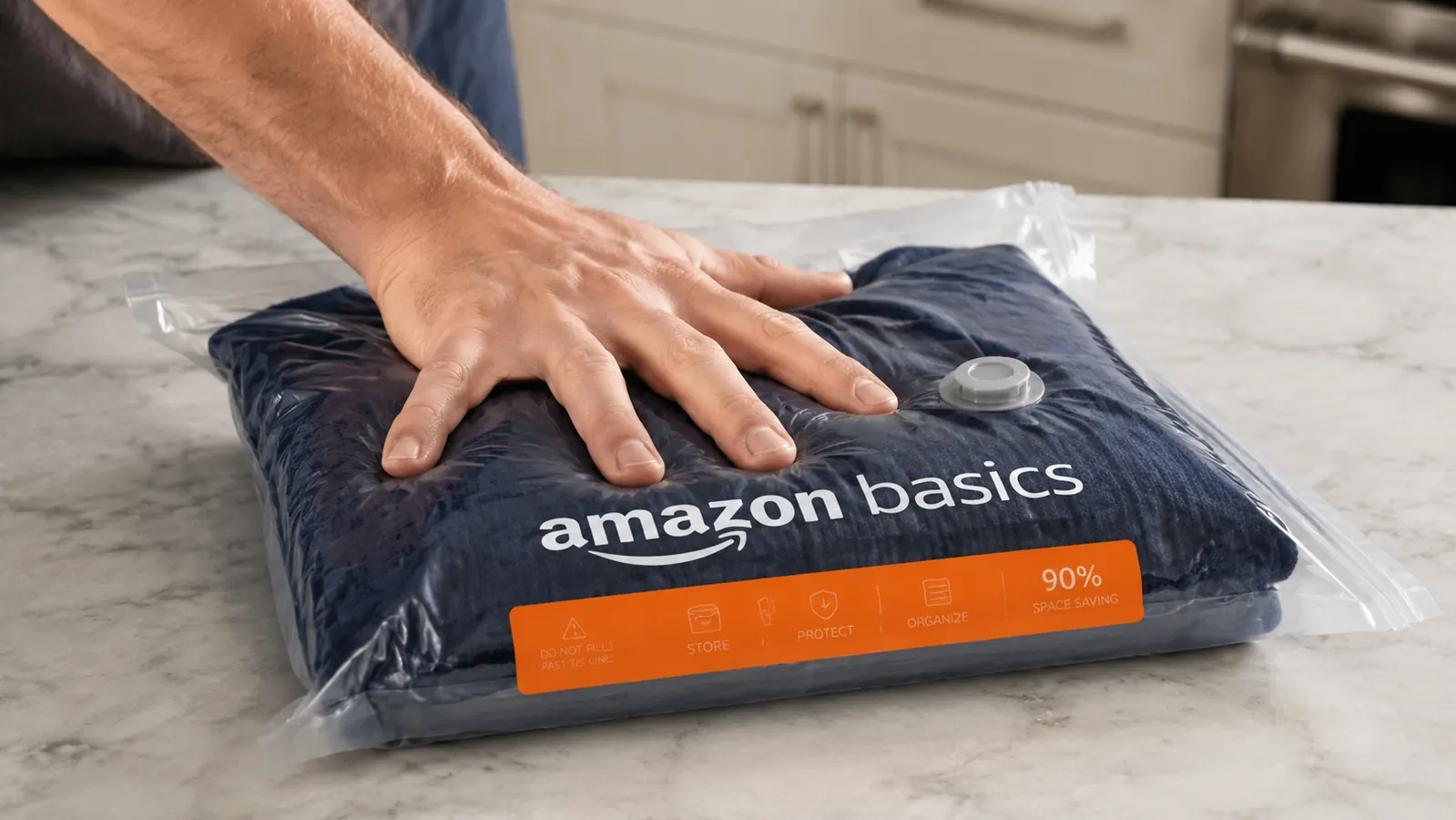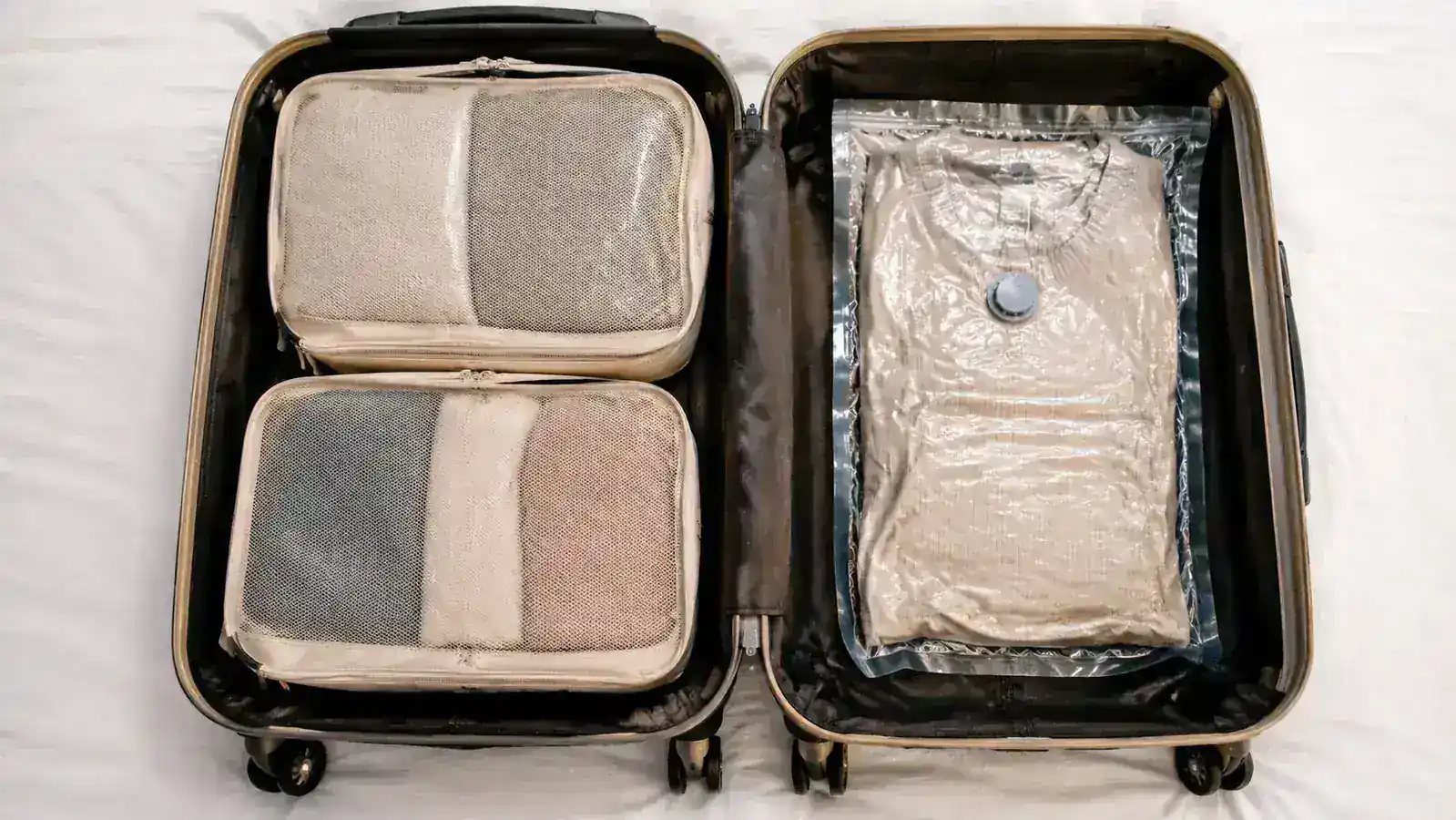
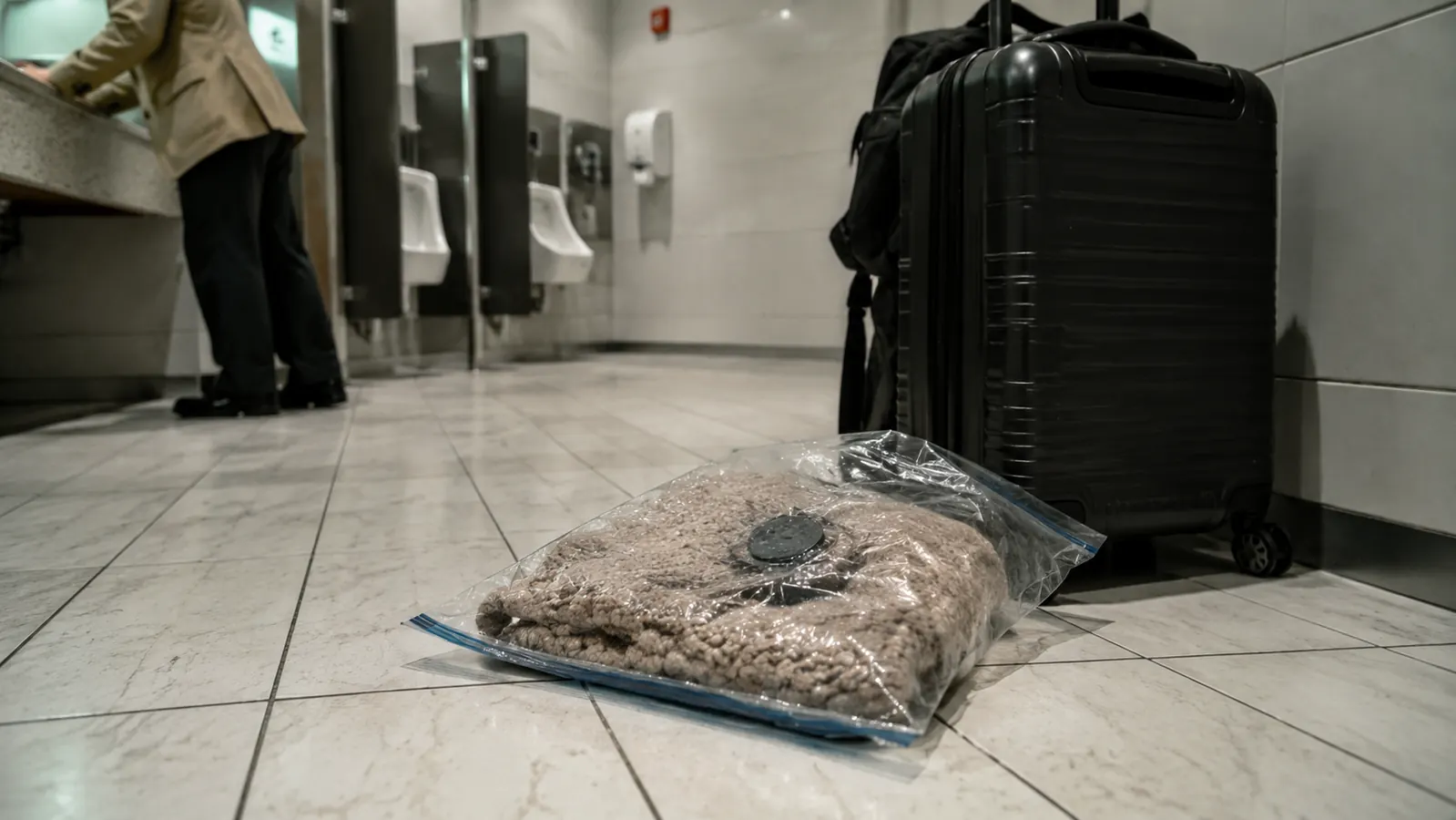
The first time I bought Amazon Basics vacuum storage bags, I returned them within a week. I had stuffed a silk blouse and two button-down shirts into one, rolled it up like the instructions said, and pulled out a compressed brick that looked like it had spent a week under a car jack. The shirts came out with creases so deep they needed a full pressing cycle to recover. I left a one-star review and bought packing cubes instead. That was my honest experience with vacuum bags for about two years.
The second time I bought these bags, twelve months ago now, I had a specific problem: a carry-on trip to Iceland in November with a puffer jacket, two wool sweaters, and a stubborn refusal to check a bag. I bought them again knowing I had hated them once, tested them on a different set of fabrics, and discovered that I had been using them completely wrong the first time. Not wrong technique, wrong clothes. The Amazon Basics vacuum storage bags, ASIN B07RSCPH4N, are real and useful and worth the current price. But they are also the most misunderstood packing tool in a carry-on traveler's kit, and the things nobody puts in their review are the things that will actually decide whether they work for you.
Quick Verdict
Genuinely excellent for lofty fabrics like down and fleece, genuinely terrible for anything you actually need to look presentable in. Know which side of that line your wardrobe falls on before buying.
Amazon Check Today's Price →Carrying a down jacket is the one problem these bags solve better than anything else at this price.
The Amazon Basics vacuum storage bags work, but only for the right fabrics. If you are packing a puffer, a fleece, or bulky sweaters, check the current price before your next cold-weather trip.
Amazon Check Today's Price on Amazon →The Bag Clutch Test: The Quickest Way to Know If Your Seal Is Going to Hold
Nobody talks about this and it should be the first thing in every review. After you seal and compress a vacuum bag, before you put it in your suitcase, grab the sealed bag with both hands and squeeze it firmly for five full seconds. Not a light press. A real clutch, like you are trying to feel if something is inside. If the bag gives even slightly, if you can feel air moving under the plastic, your seal is not seated and the bag will be half-inflated by the time you reach baggage claim. Not because the bag is defective, but because the double-zip seal on these has about six inches of length and every millimeter of it needs to be engaged.
The fix is simple once you know what you are looking for: run your fingernail slowly along the inside channel of the zip while pressing the two sides together. You will feel small gaps where the groove has not snapped. Press each one individually. Then do the clutch test again. A properly seated seal on these bags does not move at all under hand pressure. It feels almost rigid. If you get to that point, the bag will survive the flight. I have had exactly two bags fail the clutch test at the gate, which means I found out in the terminal instead of at the hotel. That is the only version of a vacuum bag seal failure I have patience for.
The Leak Rate Over Time: What Happens After Ten, Twenty, Thirty Uses
Here is a number I have not seen in any other review of these bags: across four bags used for twelve months of carry-on travel, my leak rate in the first ten compressions was zero. Compressions eleven through twenty, I had two partial seal failures, both from bags I had handled roughly pulling them out of packed suitcases. Compressions twenty-one through thirty-plus, I had one additional failure and one bag that I retired because the plastic near one corner had developed a small stress crease that let air in slowly regardless of how carefully I sealed the zip.
So the honest answer to how long these last is: about 20 to 25 good compressions per bag if you handle them carefully, closer to 15 if you tear them open aggressively when unpacking. At the current price that works out to a few cents per use, which is a reasonable wear rate for a travel packing tool. The key to extending bag life is how you open them on the destination end. Do not tear across the zip. Press the two sides of the zipper apart from one corner, releasing tension gradually. The plastic near the seal is the most vulnerable point and careless opening is the fastest way to shorten the bag's useful life.
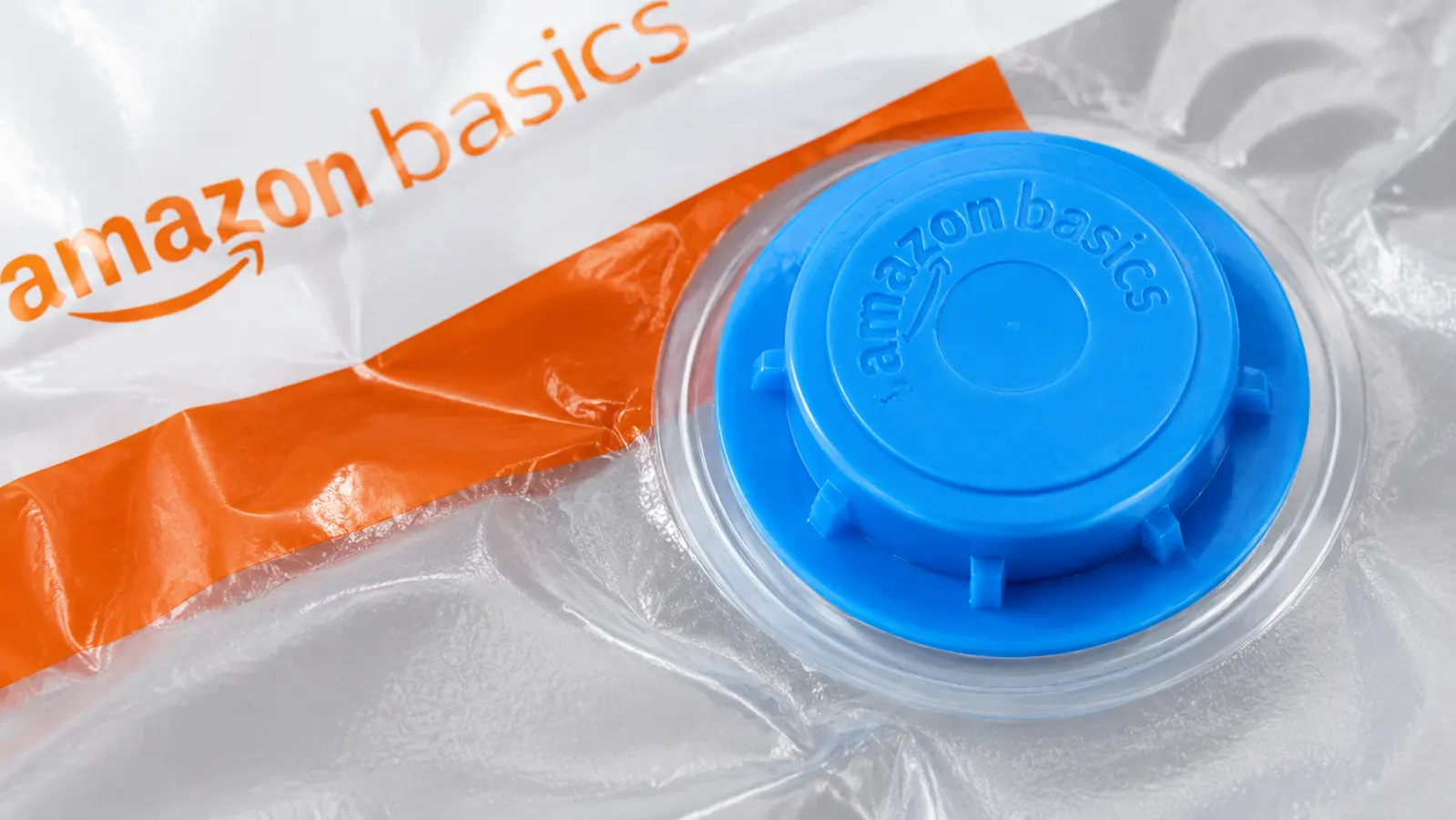
The Valve Gunk Problem Nobody Warns You About
If you use these bags more than a few times, open the valve and look inside it. There is a one-way flap inside the circular plastic housing that allows air to exit when you connect a vacuum hose. Most travel users never engage the valve at all, they use the roll method instead. But that valve is still present and it collects lint, fabric fibers, and fine debris from whatever is packed inside the bag, especially wool and fleece items.
After about six to eight uses with wool sweaters inside, I noticed one of my bags was taking noticeably longer to compress and losing air slightly faster than normal. When I looked at the valve I found a visible plug of gray wool fiber packed into the flap housing. A cotton swab cleared it in about thirty seconds. The valve works correctly once cleaned and the bag performed normally after. But if you skip this step and the valve flap gets stuck open by a fiber bridge, air can slowly leak back through it even when the zipper seal is perfect. My rule now: check and clean the valve every three or four trips with any wool or fleece fabric. Cotton and synthetic puffers shed almost nothing and rarely cause this issue.
The Fabrics That Should Never Go in a Vacuum Bag
This is the section I wish someone had written for me before my first purchase. There is a category of clothing that vacuum bags will ruin in a way that is time-consuming to fix and sometimes permanent. The common thread is structure: anything that holds a shape through weave tension, internal construction, or fabric memory will come out of a vacuum bag with deep compression creases that a hotel iron or a day of hanging does not fully resolve.
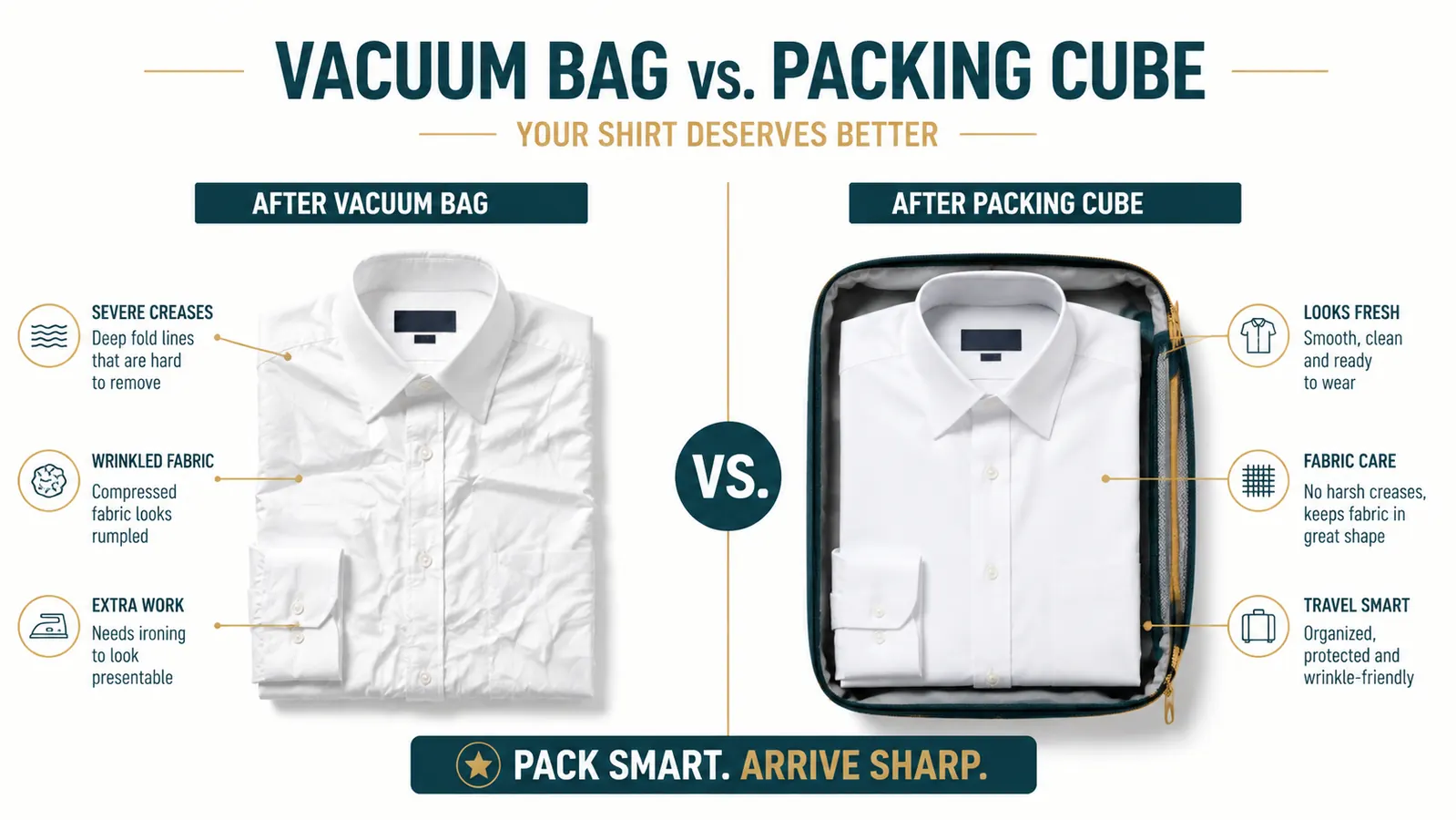
The short list of things I will not put in a vacuum bag ever again: button-down dress shirts, whether cotton or linen or broadcloth. The collar and placket compress into creases that require pressing equipment to remove, and most hotels either do not have irons or have irons that produce steam in an unpredictable pattern. Blazers and suit jackets. The shoulder construction flattens under compression and the lining buckles in ways that no amount of steaming fixes easily without a professional press. Anything with a print or embellishment, including screen-printed t-shirts and embroidered pieces. Compression creates surface cracking in prints and can crack embroidery thread over repeated use. Silk and delicate synthetics. These fabrics develop a permanent surface texture from compression that looks like fine wrinkles under any light.
The items that come out of a vacuum bag looking fine, or at worst needing a quick hang in a steamy bathroom: down jackets and puffers (designed to compress and re-loft), fleece (no memory, no structure, springs back), chunky knit wool sweaters (the compression creases relax within a few hours of unpacking), hoodies, plain cotton t-shirts in darker colors where crease lines are less visible. If your travel wardrobe is built around these categories, vacuum bags are a reliable tool. If you travel in clothes you need to look professional in, they are not.
I pulled my dress shirts out of a vacuum bag in Copenhagen and spent forty minutes with a hotel iron getting them back to presentable. Never again. Packing cubes only for anything button-down.
The Wrinkle Reality: What Happens When You Unpack
I want to be specific here because the word 'wrinkle' undersells what actually happens to the wrong fabrics inside a vacuum bag. It is not the light wrinkle you get from folding clothes neatly in a packing cube. It is a compression crease, which is different in structure and harder to remove. A fold wrinkle sits on the surface of the fabric. A compression crease goes deeper because the fabric has been under continuous pressure in a compressed state, sometimes for eight to twelve hours during travel. The crease becomes partially set in the fabric memory.
For down and fleece, this is a non-issue. The fabric lofts back up within minutes of being released from the bag. For chunky wool knits, you get surface creasing that typically relaxes within two to three hours of hanging or wearing, faster if you hang the item in a humid bathroom. For anything woven with a tight structure, cotton dress shirts being the worst example, the compression crease sits across the chest, down the sleeves, and along the collar stand in a way that requires a hot iron and sometimes starch to fully remove. I have tested this more times than I needed to, in hotel rooms from Copenhagen to Nashville. The physics do not change based on how expensive the shirt is.
When Packing Cubes Beat Vacuum Bags Completely
There are two situations where I reach for compression packing cubes instead of vacuum bags and feel zero hesitation about that choice. The first is any trip where more than half my clothing is items I need to look put-together in: conferences, work travel, weddings, any occasion that puts me in business casual or above. Packing cubes hold clothes in a flat, organized stack that keeps crease lines at the fold rather than compressed into the fabric. The organizational benefit of knowing exactly which cube has which category of clothing is also something vacuum bags cannot provide since everything ends up in one clear pouch with poor visual organization.
The second situation is any trip shorter than four days. Vacuum bags are a volume solution for carry-on travelers who are genuinely space-constrained. On a three-day trip, even with one sweater and a jacket, I am not space-constrained in my Travelpro. The bags add a step with no benefit. Packing cubes keep everything accessible, organized, and ready to live out of without repacking. The moment I start needing to pull apart a vacuum-sealed brick to find my base layer, I have made packing harder, not easier. Vacuum bags earn their place on trips of five days or more where bulky cold-weather items genuinely compete with everything else for suitcase space. Below that threshold, they create work.
Pros
- Excellent compression ratio for lofty fabrics: down jackets, fleece, chunky wool knits compress to a fraction of their original volume
- No pump or vacuum needed for travel use; the roll method works reliably once you have done it three or four times
- Doubles as an odor and moisture barrier, useful for dirty laundry or wet items on return trips
- Very inexpensive and reusable across 20-plus compressions per bag with careful handling
- The clutch test tells you immediately whether your seal is going to hold, no guessing
Cons
- Creates deep compression creases in structured fabrics including dress shirts, blazers, and tightly woven cotton, which require pressing equipment to fix
- Valve accumulates lint and fiber debris from wool and fleece after 6 to 8 uses, requires cleaning or the bag slowly leaks
- Seal failure rate increases noticeably after 20 compressions per bag, especially on bags that have been opened roughly
- Useless for short trips where you are not genuinely space-constrained; packing cubes do the same job with less effort
- Requires a hard flat surface for full compression; packing on a hotel bed gives 40 to 50 percent worse results
Who This Is For
These bags belong in your packing kit if you fly carry-on to cold-weather destinations and your wardrobe involves down jackets, sweaters, fleeces, or wool layers. If that description fits even two or three trips a year, they pay for themselves on the first trip by making the difference between fitting everything in a carry-on and having to check a bag. They also belong in the kit of any traveler who does longer trips and needs a return-trip strategy for dirty laundry. If you are packing seven-plus days of clothes and want to reclaim space on the way home, one medium bag for compressed dirty clothes is one of the more useful low-cost packing tools available.
Who Should Skip It
Skip these if your travel wardrobe is business-oriented or if more than half your packing list is clothes you need to wear to meetings, dinners, or any event where you will be photographed. The wrinkle problem with structured fabrics is real and consistent, not an edge case. Also skip them if you primarily pack for warm-weather travel where bulky layers are not a factor: a well-chosen set of compression packing cubes will organize your suitcase better and give you faster access to everything inside. Vacuum bags are a specialist tool for a specific volume problem. If that is not your problem, they are just extra work.
If your puffer jacket is the reason you almost checked a bag, this is the cheapest fix you will find.
The Amazon Basics vacuum bags I tested for a full year are still available at their current price. Stick to medium and large sizes for carry-on travel, and skip them for anything you need to look polished in.
Amazon Check Today's Price on Amazon →