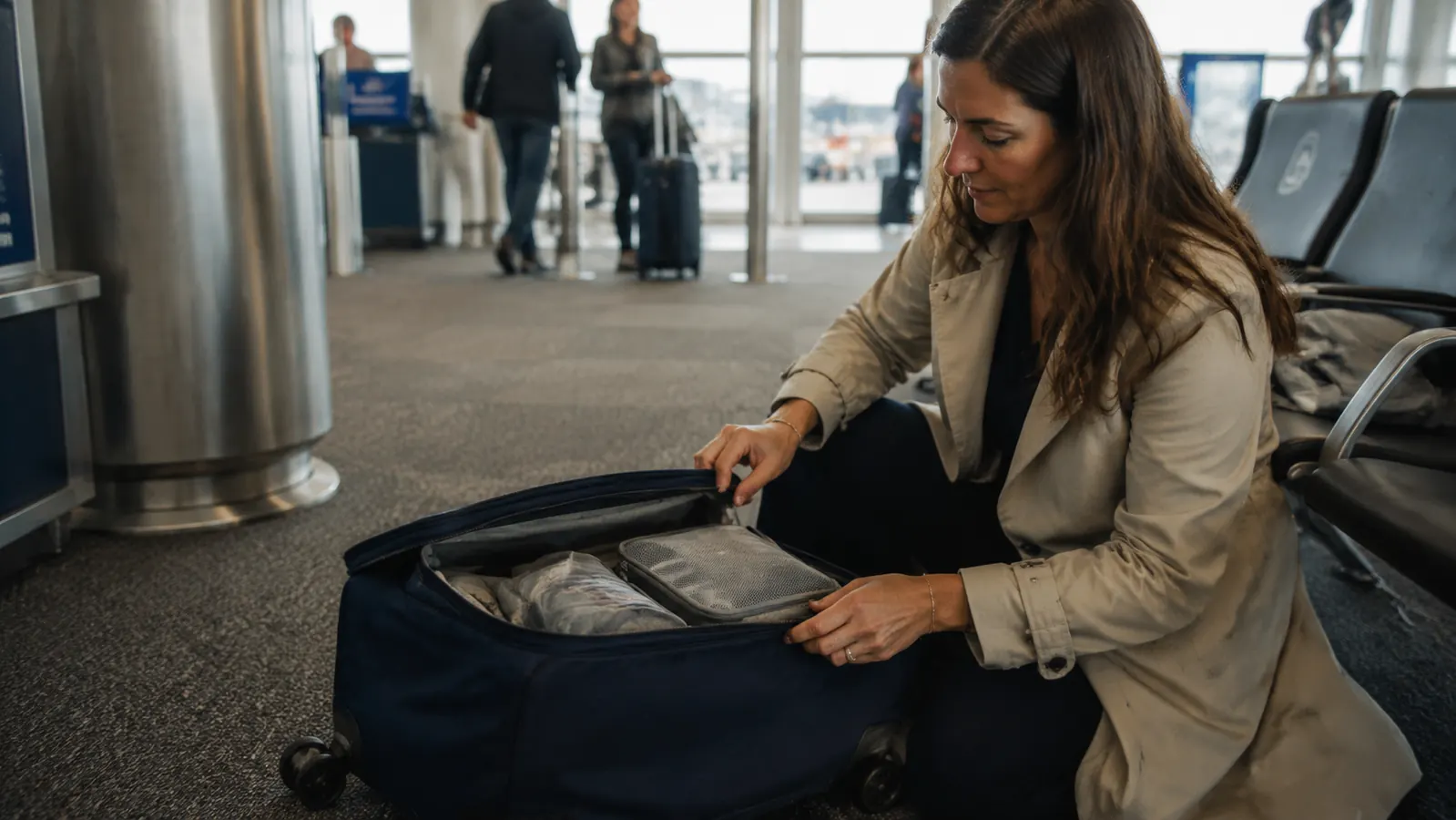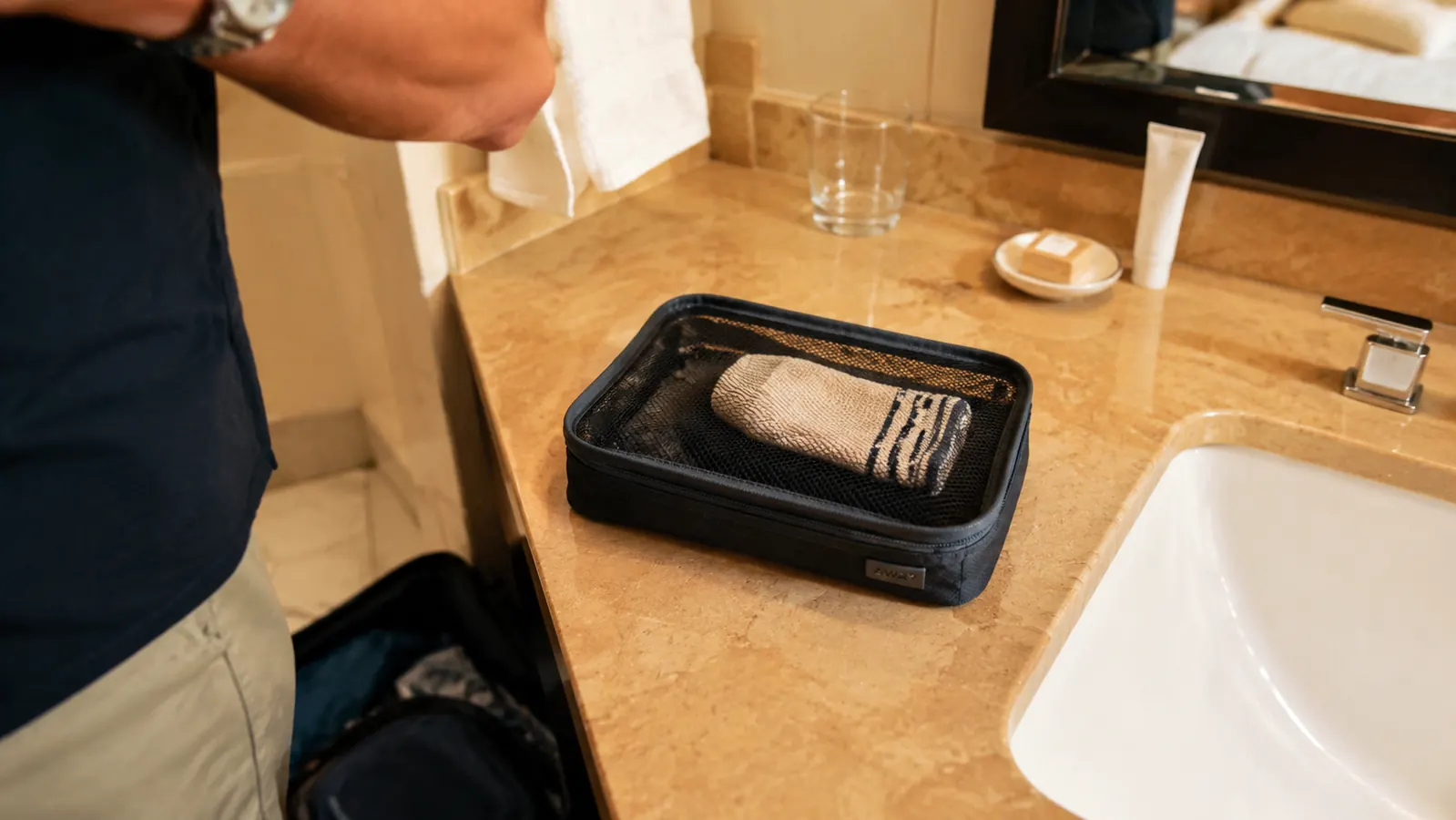
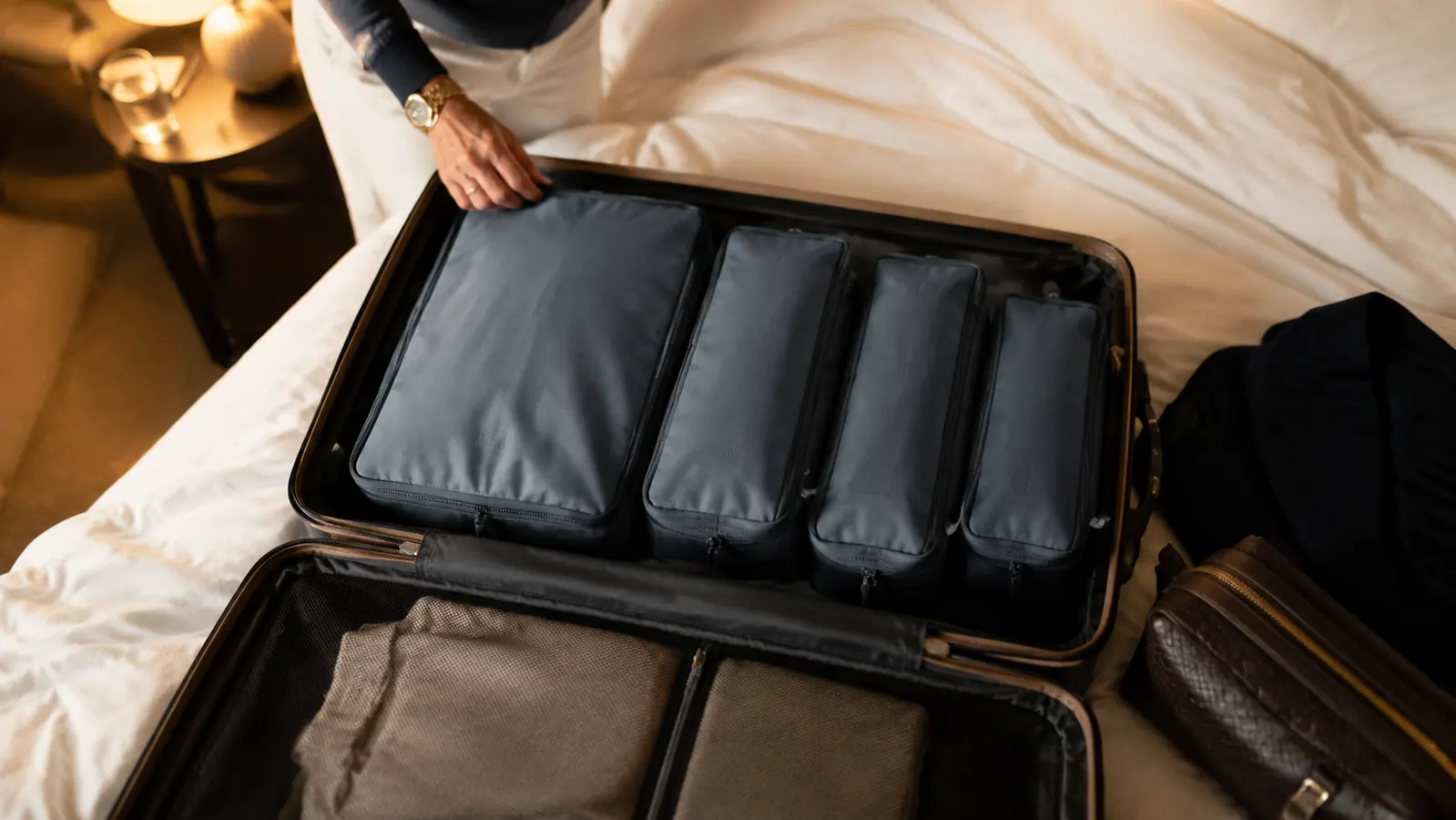
I bought my first set of packing cubes in 2019 at an airport Hudson News for $34 because my bag looked like a laundry explosion and I had 45 minutes until boarding. They fell apart in three months. Since then I have worked through six more brands, taking notes the whole time, partly out of obsession and partly because I kept getting asked the same question: are packing cubes worth it, and which ones actually hold up? BAGAIL is the one I keep recommending to people who do not want to spend $90 on Eagle Creek but also do not want to replace their cubes every six months. That does not mean BAGAIL is perfect. It means it occupies a very specific place in the market, and a lot of the marketing around it obscures what that place actually is.
This is not my long-term durability deep-dive, which covers a full year of washing and stuffing in a separate piece. This is the honest entry-point review. The one that tells you what the product listing sidesteps. If you are already considering BAGAIL and just want the unvarnished take from someone who has used seven competing brands, this is it.
Quick Verdict
A strong budget buy that organizes better than it compresses, works best for travelers packing soft casual layers, and falls short for anyone chasing maximum cubic-inch savings.
Amazon Check Today's Price →Tired of re-packing the same carry-on four times before a trip? BAGAIL is the fix that costs less than an airport cocktail.
Over 42,000 Amazon reviews. Eight pieces in the set. At the current price, this is the lowest-friction entry into organized travel packing.
Amazon Check Today's Price on Amazon →How I've Used BAGAIL (and the Six Brands That Came Before)
My testing setup is not scientific. It is two years of real carry-on travel: 30 or so trips ranging from long weekends in Tampa to 12-day stints in Portugal, always carry-on only, usually a 21-inch roller plus a personal item. The seven brands I have used enough to form an opinion on are: those generic Hudson News disaster bags, Gonex, AmazonBasics, Herschel, Peak Design, Eagle Creek Pack-It Specter, and BAGAIL. The last two are the ones most people end up comparing, so I will spend real time on that gap. But first, the things about BAGAIL that the product listing does not tell you.
I have used the BAGAIL 8-set on 11 trips over roughly 14 months. That covers one transatlantic, several long domestic weekends, a solo road trip where I used the cubes inside a duffel instead of a roller, and a five-day business trip where I had to look presentable every day. That last one was the most revealing test, and I will get to it.
Do Packing Cubes Actually Compress Your Clothes? The Honest Answer
This is the single most misleading thing about the entire packing cube category, and BAGAIL is not the only brand guilty of implying it. The product photos show rolled t-shirts and jeans squeezed into tightly zipped cubes, and the implication is that you will somehow fit more into your bag. That is only half true, and the half that is not true matters a lot.
BAGAIL's cubes have a double-layer zippered lid, which gives them a shallow compression layer. When you zip the outer layer down over a stuffed cube, you get roughly 15 to 20 percent compression on soft, rollable items like t-shirts, underwear, and thin joggers. That is real compression. What it is not: it is not the kind of compression you get from Eagle Creek's Pack-It Specter compression cubes, which have a two-panel system that effectively flattens the stack. It is also not vacuum compression. I tested BAGAIL head-to-head against my Eagle Creek set on the same pile of clothes: five rolled t-shirts, three pairs of shorts, eight pairs of underwear, six pairs of socks. The BAGAIL large cube packed them in with maybe two inches of slack to zip. The Eagle Creek large cube, at a comparable fill volume, was genuinely flatter. Not dramatically, but noticeably.
The more honest framing for BAGAIL: these cubes organize your clothes into modular blocks that stack predictably inside your roller. That stacking efficiency is where the space savings come from, not from any meaningful compression of the fabric itself. If your packing problem is that you jam everything in loose and then cannot find anything, BAGAIL solves that problem well. If your packing problem is that you have too many clothes for your bag, BAGAIL is not going to rescue you.
Packing cubes organize your suitcase. They do not compress your wardrobe. Those are two different problems, and knowing which one you have changes whether BAGAIL is the right call.
The Mesh Visibility Tax: What You Are Actually Showing the World
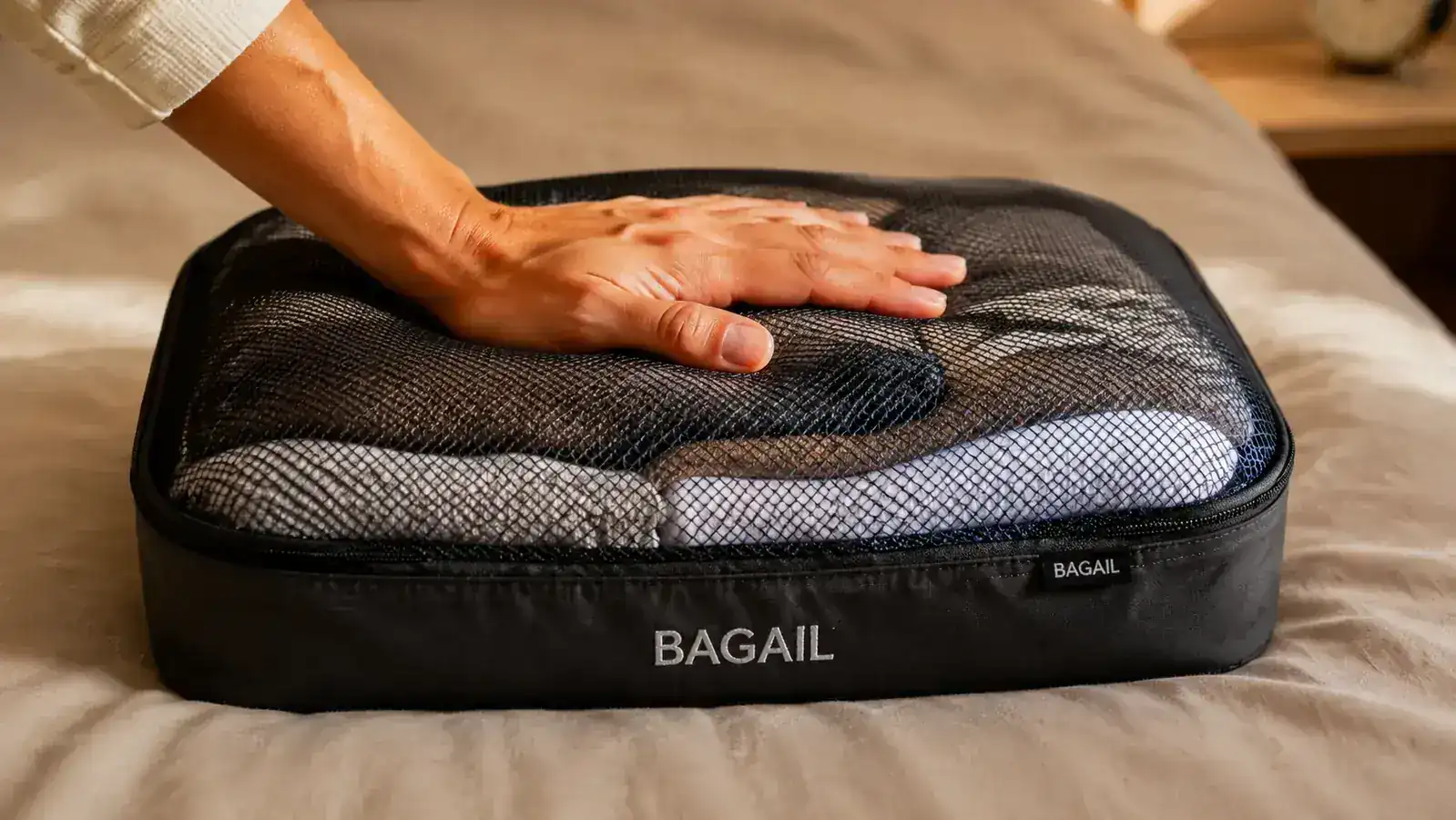
BAGAIL uses a mesh panel on the top face of each cube. The mesh serves two purposes: it lets air circulate (helpful if you are packing workout clothes) and it lets you see the contents at a glance without opening the cube. Travel bloggers love this feature. I am more ambivalent about it.
The visibility is genuinely useful when you are hunting for a specific cube in an overhead bin or a hotel wardrobe. The problem is that everything inside the cube is on display to anyone next to you at the security conveyor belt, to the TSA agent pulling your bag, and to anyone who glances at your open suitcase when you are repacking at the hotel. That is usually fine for t-shirts and jeans. It is less fine for the cube where I stuff compression shorts, bras, or period underwear. My workaround is to use the smaller solid-panel cubes for anything I would rather not put on display, but that requires more deliberate sorting than most people do when they are packing in a hurry.
If you care about this at all, Eagle Creek offers solid-panel options in a comparable price range. BAGAIL does have some solid-panel variants in their lineup, but the popular 8-set is mesh-top across the board. Worth knowing before you order.
BAGAIL vs Eagle Creek: Where the $70 Gap Actually Lives
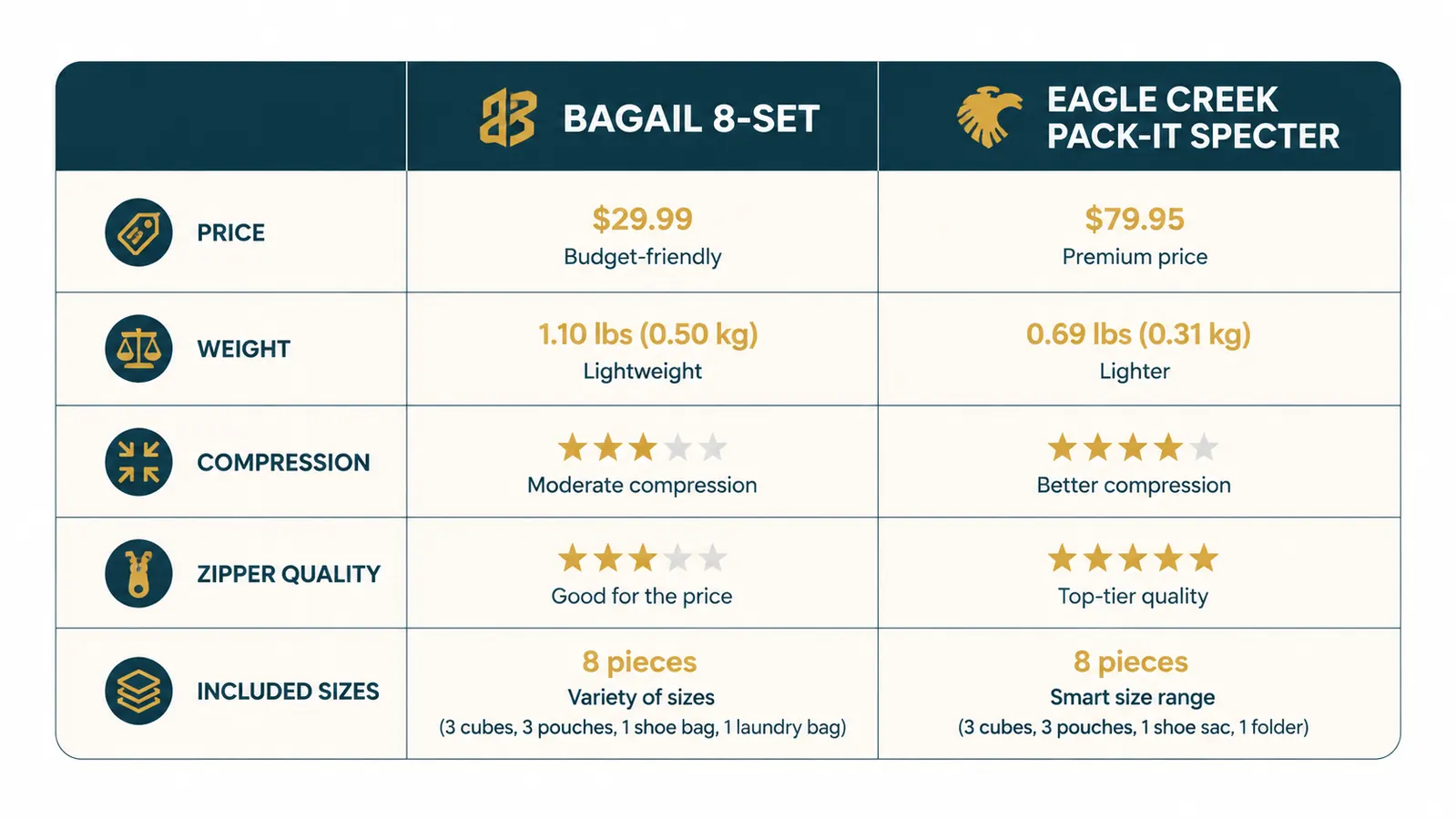
Eagle Creek Pack-It Specter is the brand people point to when they want to know if BAGAIL is worth upgrading from. The price gap is roughly $70 at current prices, and that gap is real. Here is where it actually lives.
Fabric weight: Eagle Creek's Specter fabric is a ripstop nylon that feels substantially thinner and lighter than BAGAIL's polyester. The whole eight-piece BAGAIL set weighs around 10 ounces. Eagle Creek's four-piece Specter set weighs about 2.6 ounces. If you are a gram-counter, Eagle Creek wins this one without a contest. For most people packing a 21-inch roller, the BAGAIL weight difference is irrelevant.
Zipper quality: This is where the gap is most noticeable in real use. Eagle Creek uses YKK zippers with a smooth, low-resistance pull. BAGAIL's zippers are functional but have a slightly sticky drag when the cube is packed near capacity. Over time, that drag increases as the zipper tape stretches. I have not had a BAGAIL zipper fail outright in 14 months, but two of my cubes are noticeably harder to close than they were on trip one. Eagle Creek zippers still feel new. That matters if you are planning to use these for five years.
Compression: Eagle Creek's compression cubes actually compress. BAGAIL's double-zip system gives you a light compression layer, but it is not in the same category as Eagle Creek's two-panel compression system. If maximum space savings is the reason you are buying packing cubes, spend the extra money. If organization is the goal and compression is a bonus, BAGAIL delivers that at a fraction of the cost.
Set size: BAGAIL gives you eight pieces including a laundry bag. Eagle Creek's Specter set gives you four. For travelers who want cubes in multiple sizes across different categories, BAGAIL's eight-piece setup is a real advantage, even if the individual pieces are less refined.
The Laundry Bag Nobody Uses
Every BAGAIL 8-set comes with a small laundry bag. It is listed prominently in the product description. It has a drawstring closure and a mesh panel and it is, in my experience, the piece that sits on the bottom of the cube stack and gets used maybe once every four trips.
The problem is size. The laundry bag in the BAGAIL set is roughly 9 inches by 12 inches. That is enough for two days of underwear and socks, maybe three if you fold efficiently. On a seven-day trip, your dirty laundry pile grows faster than this bag can contain it. After about day three, I end up using a plastic bag from the hotel or turning a compression cube into a dirty laundry staging area. Seasoned travelers who pack separately for dirties typically use a dedicated 15-liter laundry sack or a dry bag. The BAGAIL laundry bag is a nice inclusion but do not let it factor into your purchase decision as a meaningful feature.
If you actually want a functional dirty laundry system inside a carry-on, allocate one of the medium BAGAIL cubes to dirty clothes and use it consistently. That works better than the included bag on any trip longer than four days.
The Business Trip Test: Where BAGAIL Fell Short for Me
My five-day business trip was the test that showed me BAGAIL's real ceiling. I needed two dress shirts, one blazer, two pairs of dress pants, a pair of jeans, five days of basics, and a pair of dress shoes. My bag was a Travelpro Maxlite 5 at 22 inches. I am a competent packer. I have done this trip before.
The issue: dress shirts do not roll. You fold them flat and stack them, or you get to the hotel with a shirt that looks like it was shipped in a paper envelope. BAGAIL's cubes are not shaped for flat-folded dress shirts. The large cube is roughly 13 by 10 by 4 inches, which means a folded dress shirt sits in there with a fold across the shoulder, creating a crease exactly where you do not want one. Eagle Creek makes a flat pack cube specifically for this purpose. BAGAIL does not have a comparable option in their standard 8-set.
If you are a casual-clothes traveler, jeans and t-shirts and activewear, BAGAIL is nearly ideal. If business travel is a regular part of your packing reality, you will either need to supplement with a flat pack folder or look at Eagle Creek's more specialized lineup. That is not a knock on BAGAIL, it is a category limitation worth naming clearly.
Pros
- Eight pieces for under $20 is genuinely hard to beat as a starter set
- Double-zip compression layer works well for soft, rollable casual clothing
- Mesh panels make contents visible without opening, useful for security bins
- Multiple sizes cover the full range from small accessories to large clothing loads
- Color options let you build a personal color-coding system across categories
- Holds up well for at least 12 to 18 months of regular use based on my experience
Cons
- Not a substitute for true compression cubes if space savings is your primary goal
- Mesh panels show all contents including items you may prefer to keep private
- Zippers develop drag over time and feel noticeably stiffer after six or more months
- No flat-fold option for dress shirts, a real gap for business travelers
- Included laundry bag is too small for trips longer than three days
- Polyester fabric is noticeably heavier than Eagle Creek's ripstop nylon alternatives
Who This Is For
BAGAIL is the right call if you are packing casual clothes for leisure trips, weekend getaways, or the kind of trip where you live in jeans, t-shirts, and one nice-ish dinner outfit. It is also the right entry point if you have never used packing cubes before and you want to try the system without spending $90 to find out if you will actually stick with it. The set is large enough to run a real color-coding system, the sizing variety covers most use cases, and the price makes experimenting essentially risk-free.
Who Should Skip It
If you are a business traveler who regularly packs dress shirts, slacks, or blazers, BAGAIL's cube shapes will frustrate you. If you are a gram-counter trying to squeeze every ounce out of your carry-on, Eagle Creek's Specter line is lighter and better at genuine compression. If you need a laundry separation system that actually works across a seven-plus-day trip, the included bag will not cut it and you should plan around that from the start. And if you are packing through extreme temperature swings, bulky sweaters and down layers compress better in vacuum bags than in any packing cube at this price point.
If you are still packing loose and repacking at the gate, BAGAIL fixes that for less than a gate-checked bag fee.
The 8-set covers every category from shoes to laundry. At the current price it is the lowest-cost way to find out whether organized packing actually changes your trip. Over 42,000 reviewers think it does.
Amazon Check Today's Price on Amazon →