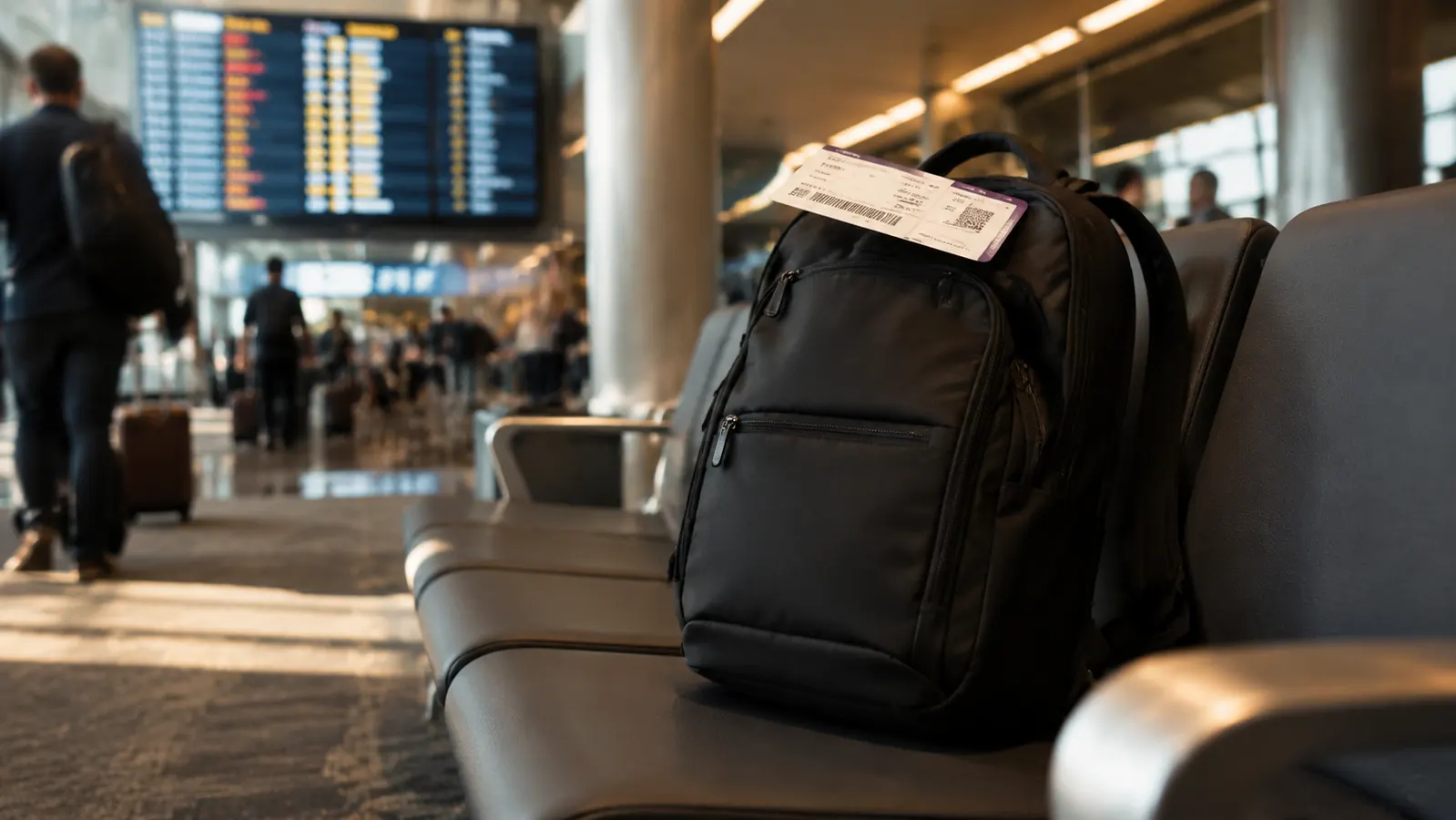
I want to tell you something that the 10,000-plus Amazon reviews for the coofay personal item backpack mostly skip over: this bag is not right for every traveler, and the people it is wrong for will figure that out within their first two flights. I figured it out on a Monday morning out of Midway, packed into a CRJ-700 with no overhead space and a gate agent who gave my bag a long, measuring look. The bag made it under the seat. I made it to my meeting. But I spent 47 minutes on that flight noticing the shoulder straps and reminding myself I had paid under $25 for this thing and needed to recalibrate my expectations accordingly. So here is my actual honest assessment after six months: everything I wish somebody had told me before I clicked purchase.
This is not a two-flight review written for a commission. I have taken the coofay through three Spirit flights, two Frontier flights, one CRJ-200 hop out of Columbus where I had to gate-check my carry-on and was sincerely glad the coofay was small enough to keep, and roughly 17 additional mainline flights on United and Southwest. I know this bag now. The good parts and the parts that make me want to quietly suggest alternatives to certain kinds of travelers.
Quick Verdict
A genuinely compliant personal item at a price that makes no other bag in this category sensible to buy, undercut by thin shoulder straps, a water bottle pocket that sags when loaded, and a silhouette that reads 'college student' more than 'capable traveler.'
Amazon Check Today's Price →Tired of paying overhead-bin upgrade fees on Spirit or Frontier? This bag is sized to stay under the seat.
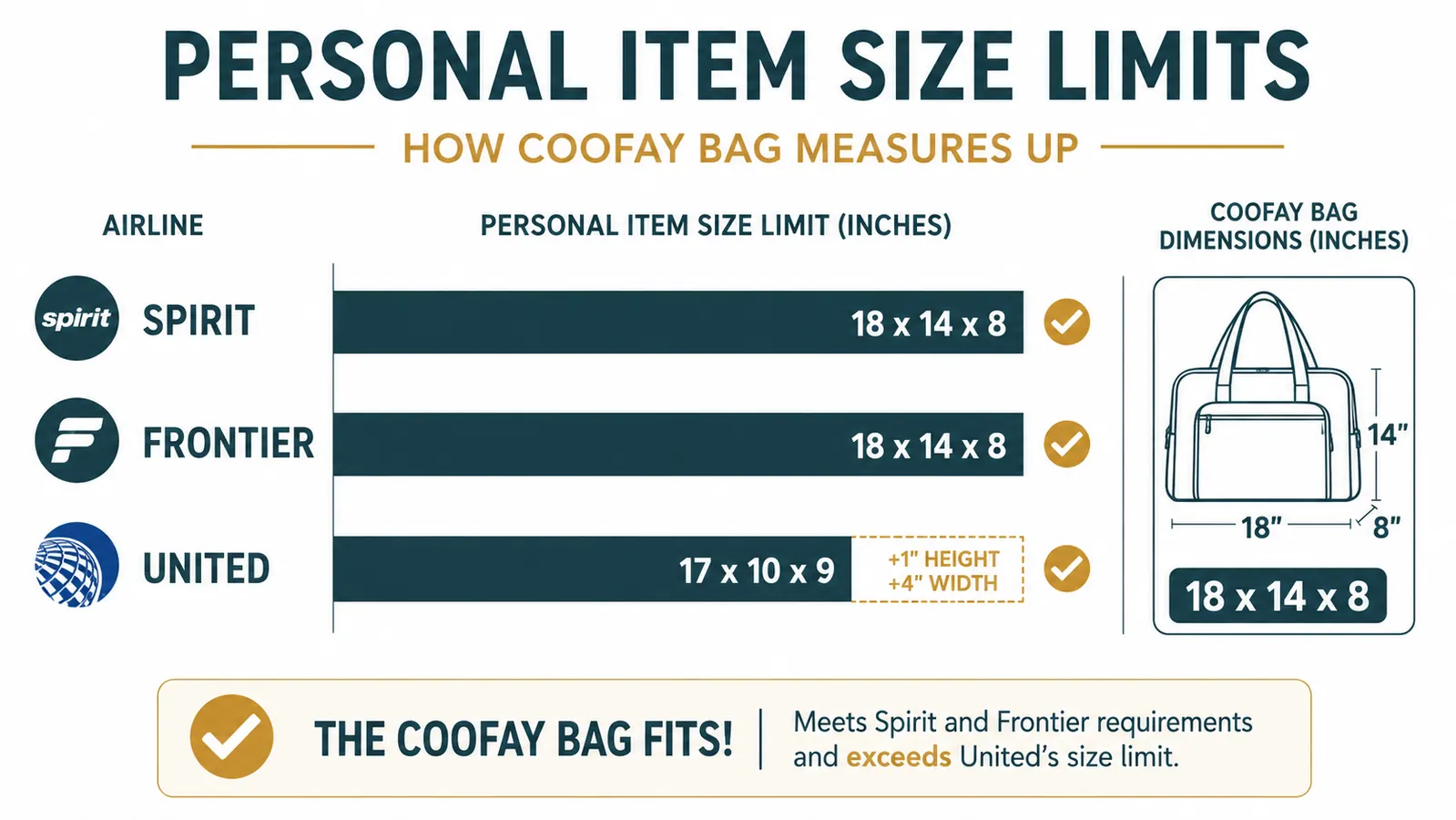
The coofay personal item backpack fits Spirit, Frontier, and United personal item rules at 18 x 14 x 8 inches. At the current price, it costs less than a single checked-bag fee on most budget carriers.
Amazon Check Today's Price on Amazon →How I Have Actually Been Using This Bag
My test conditions: six months, approximately 22 flights, carriers including United, Spirit, Frontier, and two regional hops on SkyWest CRJ equipment out of Columbus and Midway. The coofay serves as my under-seat personal item bag paired with a 22-inch carry-on in the overhead bin on mainline routes. On three Spirit basic-economy trips where overhead access was not included in my fare, the coofay was my only bag, and that required the most disciplined packing I have done in years.
On a typical two-night business trip, the coofay carries a 15-inch laptop, travel charger brick with cables, AirPods case, one change of clothes rolled tight, a small toiletry bag, my neck wallet, and a paperback. On Spirit-only trips I swapped the paperback for a Kindle and added a second outfit, which brought the total load to about 14 pounds. Weight matters here because 14 pounds is also the point at which the shoulder strap situation starts to become a conversation I need to have with you.
The Shoulder Strap Problem Nobody in the Reviews Mentions
The shoulder straps on the coofay are thin. Not negligently thin, not so thin that they are cutting into your shoulders after ten minutes, but thin in the way that reminds you, about 25 minutes into a long terminal walk with 14 pounds on your back, that you are carrying a bag that cost under $25. The foam padding is maybe a third of an inch at its thickest point. There is a curved shape to the straps that follows the body reasonably well, but when weight concentrates on that foam for an extended walk, it compresses quickly.
On the short transit from gate to rideshare, roughly five to eight minutes of walking, you will not think about this. On a mile-long terminal transfer at O'Hare or a 20-minute walk through LAX to the rideshare pickup area, your shoulders will start expressing their opinions. I wear the coofay for airport transit only, not as a full-day city daypack. If your travel involves wearing the bag for a three-hour city walk loaded to capacity, your body will let you know the shoulder straps were not designed for that. The fix is to keep the bag light and use it as the under-seat personal item it was built to be, not as a hiking pack. But that ceiling is real and the product listing does nothing to communicate it.
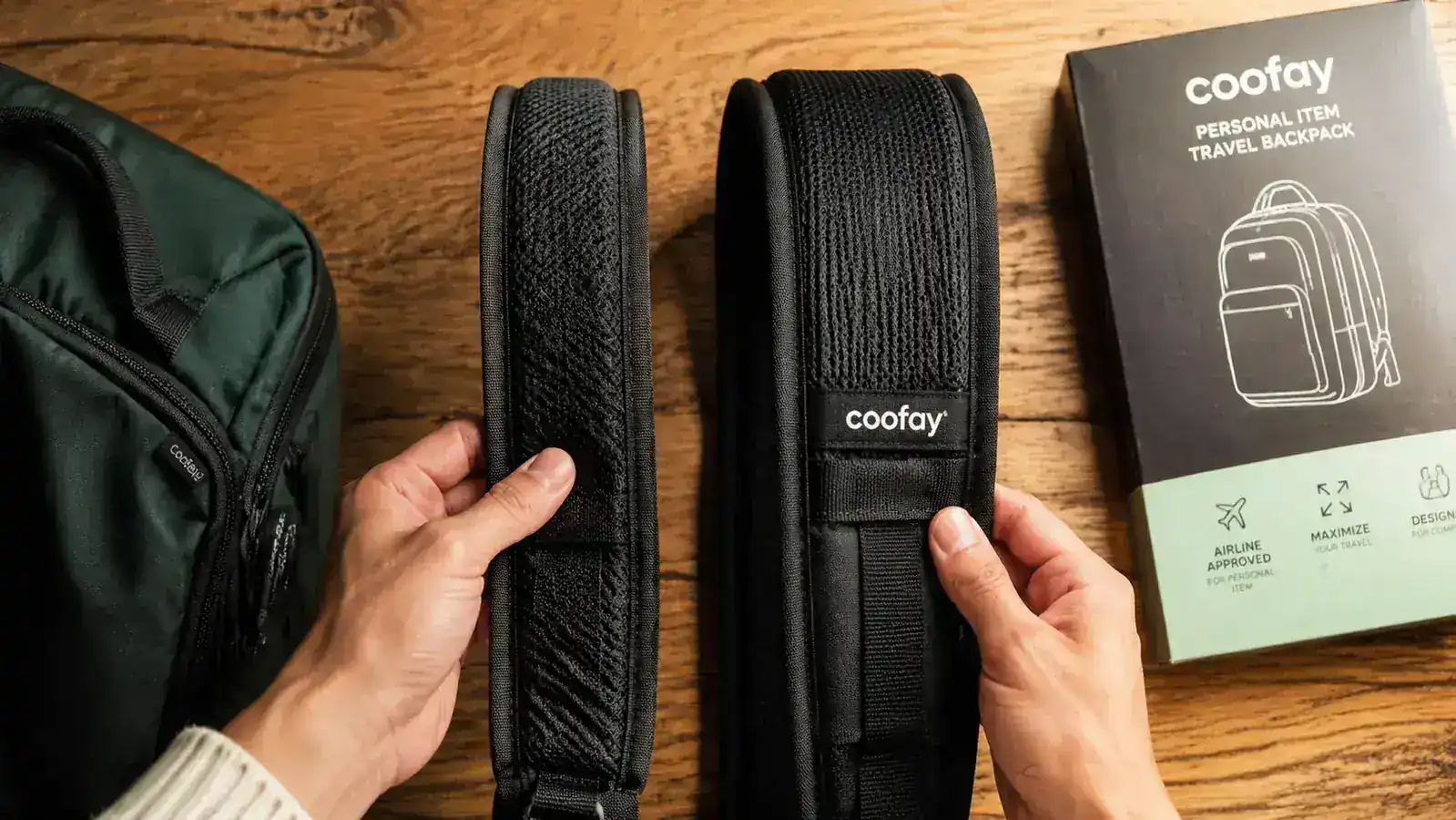
The shoulder straps are fine for a 12-minute airport walk at reasonable weight. They are not fine for a three-hour city tour with 14 pounds on your back. Know which trip you are packing for before you order.

The 737 vs the CRJ: Where This Bag Fits and Where It Gets Tight
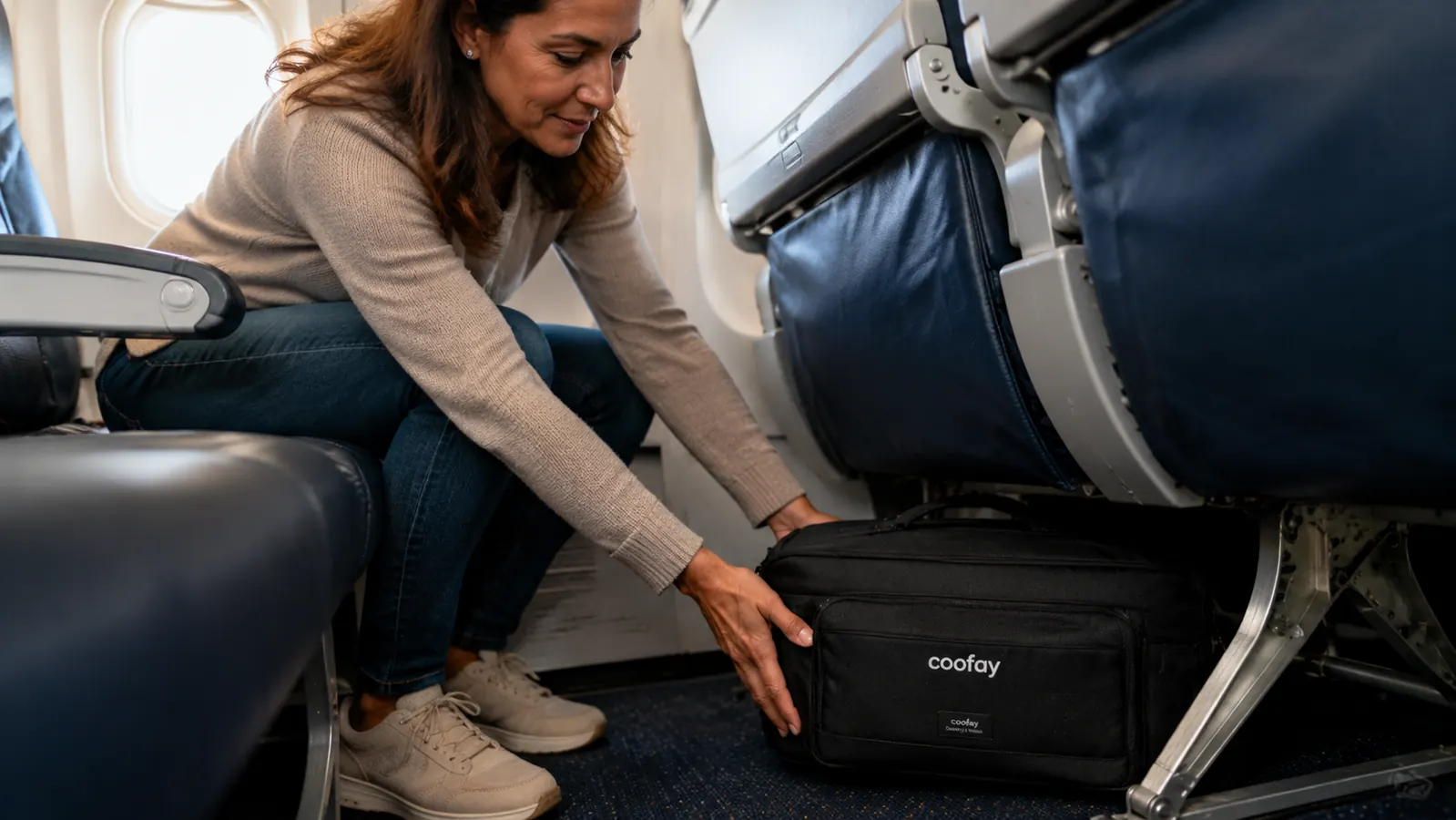
On a standard Boeing 737 in economy, the under-seat space is generous enough that the coofay slides in cleanly and leaves visible room to spare. No angled insertion, no compression required, no uncomfortable conversation with the person in the aisle seat about whether your bag is past the line. On a 737-900 or 757 with the seat track divider bar running through the middle of the under-seat space, the bag still fits if you push it in lengthwise so the longer dimension goes toward the window. This is the scenario most people buying this bag will encounter, and it works without drama.
Regional jets are a different story, and this is where knowing your aircraft type before you fly matters. On a CRJ-700 the under-seat cavity is shallower than on mainline equipment, and the coofay fits, but it fits without comfortable margin. It goes in nose-first at a slight angle and you feel the seat structure on either side. On a CRJ-200, which is the smaller regional jet with an even tighter cabin, the bag cleared the under-seat space on my Columbus trip only because I had not packed it to more than about 75 percent capacity. A fully stuffed coofay on a CRJ-200 is likely to become a discussion with a flight attendant, which is a discussion you will lose. Check the tail number on FlightAware the night before your regional hop. If you see CRJ-200 equipment, either pack lighter than usual or make peace with a gate-check situation for the carry-on and a lap for the coofay.
The Water Bottle Pocket Sag
The left-side water bottle pocket on the coofay is a mesh sleeve with elastic at the top. When the bottle is tall and snug against the bag, it performs adequately. Put a 24-ounce Nalgene or a standard 32-ounce Hydro Flask in there and the pocket sags to the left in a way that unbalances the bag noticeably as you walk. It is not catastrophic and does not cause the bag to list, but it bothered me enough after the first few flights that I stopped using the left pocket for bottles and started putting my water bottle inside the main compartment instead.
The deeper issue is elastic tension over time. After about four months of daily use, the elastic at the top of that left pocket had stretched to the point where a standard 20-ounce bottle sat loosely and shifted when I walked. On one flight out of Nashville I reached back and the bottle was not there. I found it on the jetway floor about 15 feet behind me. Not an emergency, but it would have been if the bottle had been open or if it had slid toward the jet bridge gap. The right-side pocket is tighter and has held its tension better across six months. If you need a water bottle accessible during transit, use the right side and manage the left pocket as dead storage for lighter items like sunglasses or a magazine.
The Look: Let's Be Honest About What This Bag Signals
The coofay is a clean-looking bag. The solid black version is presentable in a generic way. But it does not look professional in the way a Peak Design Everyday Backpack looks professional, or the way a Knack Series 2 or a Tumi Alpha communicates that you are someone who invests in their gear. It looks like a competent student commuter bag, which is largely what it was designed to be. The zippers are smooth-running and have not caused me problems, but they are lighter-gauge hardware, not the beefy YKK pulls you find on bags that cost three to five times as much. The fabric feels like solid nylon, not premium nylon. You can feel the price difference when you handle it next to something that costs more.
Over the past six months I walked into two client-facing meetings with the coofay. In both cases it stayed in the car or under the conference table, not on the chair next to me. That is a personal call, but I want to name it honestly. If your travel includes days where clients, partners, or colleagues will see your bag and draw conclusions from it, the coofay is the bag you carry to the hotel and swap out before the meeting. It is excellent transit gear. It is not a bag that performs gracefully in every professional context.
What Actually Works Well
The front organization panel is genuinely useful and better thought-out than I expected at this price. There are two zippered pockets on the front face: one large enough for a 10-inch tablet and documents, one sized for accessories including a charging brick, cables, and earbuds. Inside the main compartment, a padded laptop sleeve holds a 15-inch machine securely without the bag appearing bulgy. The main cavity is wider than the exterior photos suggest, and rolling two outfits plus a small toiletry kit into it is achievable without any packing gymnastics.
The luggage pass-through sleeve on the back panel, the one that slides over a rolling carry-on handle, is a small feature that earns its place every time I use it. Walking a long terminal with both hands free while the coofay rides the carry-on handle is genuinely convenient and not a feature you always find at this price point. The padded back panel resists sweat better than I expected for an under-$25 bag. And across six months including three outdoor trips where the bag sat in direct sun for hours, none of the color has faded, none of the stitching has pulled from the seams, and the main zipper has not skipped or snagged once.
At the price, the durability-per-dollar ratio is genuinely difficult to argue against. A single Spirit or Frontier carry-on upgrade fee costs more than this bag. That math alone makes the coofay worth owning if you fly those carriers even twice a year. The issue surfaces not because the bag is badly made but because buyers sometimes carry expectations that were shaped by bags that cost four times as much.
Pros
- Fits Spirit and Frontier personal item dimensions exactly at 18 x 14 x 8 inches
- Slides cleanly under a 737 economy seat without awkward repositioning
- Padded laptop sleeve holds a 15-inch machine without adding visible bulk
- Luggage pass-through sleeve makes long terminal walks hands-free
- Main zipper has not skipped or snagged once across six months of heavy use
- Priced so low that a single saved checked-bag fee covers the full cost
Cons
- Shoulder straps are thin and uncomfortable on walks longer than 20 minutes with a full load
- Left water bottle pocket elastic stretches out and fails to hold a bottle securely by month four
- Tight fit on CRJ-200 regional jets when packed past 75 percent capacity
- Looks like a student commuter bag, not a professional travel bag
- No hip belt or sternum strap for loads above 12 pounds
- Main compartment interior has minimal structure, just one open cavity with the laptop sleeve
Who This Is For
The coofay personal item backpack is the right call if you fly primarily on mainline 737 or A320 equipment and want a reliable, low-cost way to dodge personal item upgrade fees on Spirit, Frontier, and basic-economy fares. It is right for the traveler who packs light, values compliance over aesthetics, and is not going to be wearing the bag for a full city day. It is the right bag for weekend domestic trips, quick business hops where you are not in front of clients on landing day, and any route where you need the under-seat space to stay predictable. If your trips fit that description, the coofay will do its job and cost you less than one gate-agent argument.
Who Should Skip It
Skip the coofay if you fly a lot of regional routes. CRJ-700 and CRJ-200 under-seat space is genuinely tight, and loading this bag to capacity on a regional hop is an argument you may have to lose. Skip it if you routinely carry 14 or more pounds in your personal item, because the shoulder straps will make their limitations known within a week. Skip it if your clients or colleagues see your bag directly and you want your gear to signal the same level of investment as your work. Skip it if you need a water bottle pocket that stays reliably snug after more than a few months of use. The Peak Design Travel Backpack 45L, the Knack Series 2, and the Tom Bihn Synik 30 all offer better construction, better strap systems, and better professional polish for people who need those qualities. They cost three to six times more. Whether that price gap is justified depends entirely on how you use a bag and what you need it to say about you when you walk into a room.
If you fly Spirit or Frontier more than twice a year, this bag pays for itself on the first round trip.
The coofay personal item backpack is sized to clear Spirit and Frontier's personal item gauge without an upgrade fee. Check today's price and see if the math works for your next booking.
Amazon Check Today's Price on Amazon →