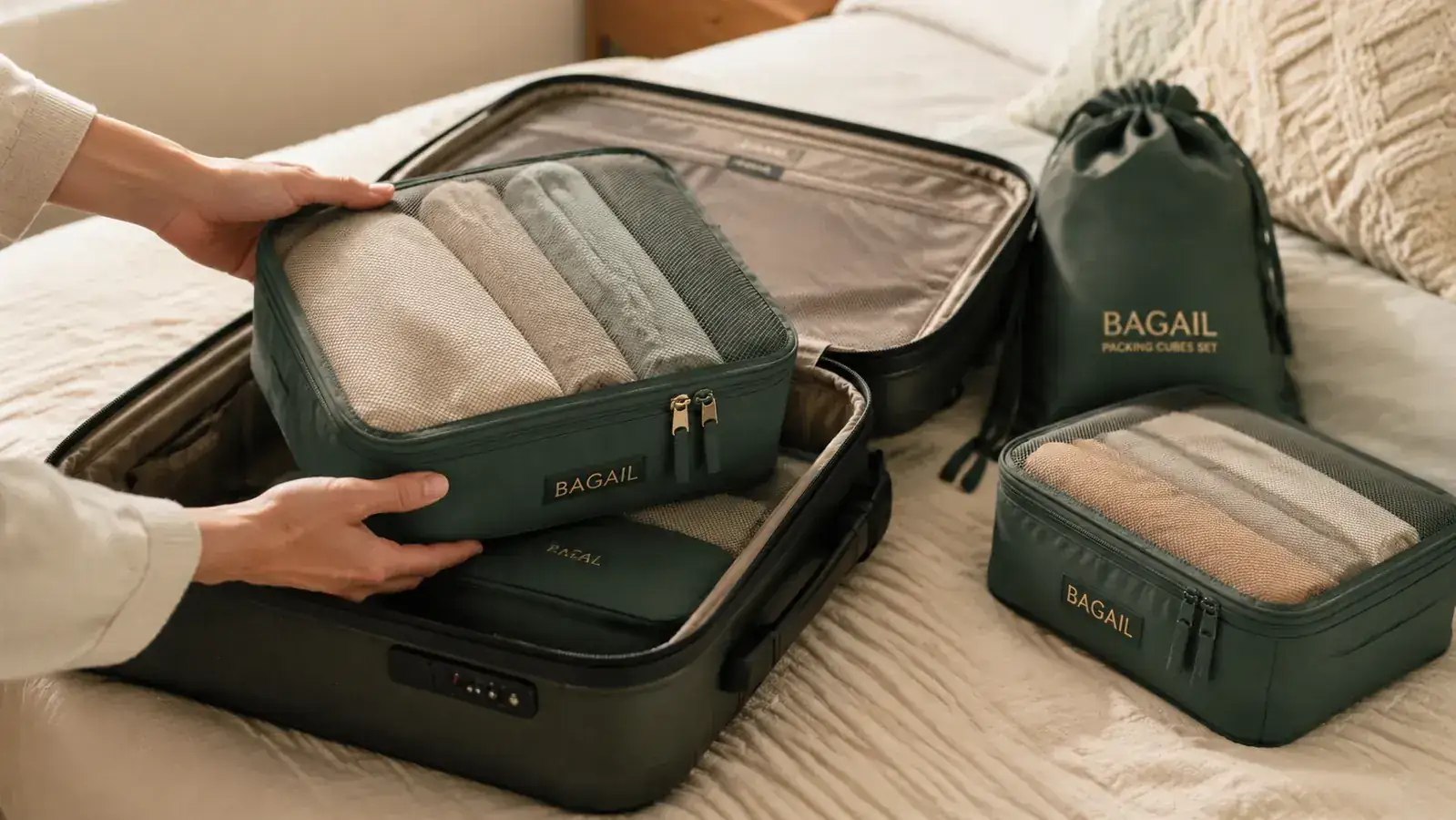
I packed for a 10-day trip to Portugal last October using a single 22-inch carry-on and a slim daypack under the seat. No checked bag. No gate-check conversation. I walked off the plane in Lisbon, grabbed my bags from the overhead bin, and was outside in nine minutes. The woman next to me was still waiting at baggage claim when I was already in my taxi.
The question I get most often is: how do you actually fit a week of real clothes in there? Not travel-blogger clothes, not wrinkle-free nylon capsule-wardrobe fantasy clothes. Real clothes for real trips. The answer is that packing cubes are not optional, and the system matters more than the bag. This guide walks through exactly how I do it, step by step, using the BAGAIL 8-set packing cubes as the organizing framework throughout.
If you do not have a packing cube set that covers every size, this system falls apart at Step 2.
The BAGAIL 8-set includes XL, Large, Medium, Small, and two Slim cubes, which is the full range you need to separate categories cleanly. Over 42,000 buyers, 4.6 stars, and the current price will not stay this low forever.
Amazon Check Today's Price on Amazon →Step 1: Start With the Clothing Audit, Not the Suitcase
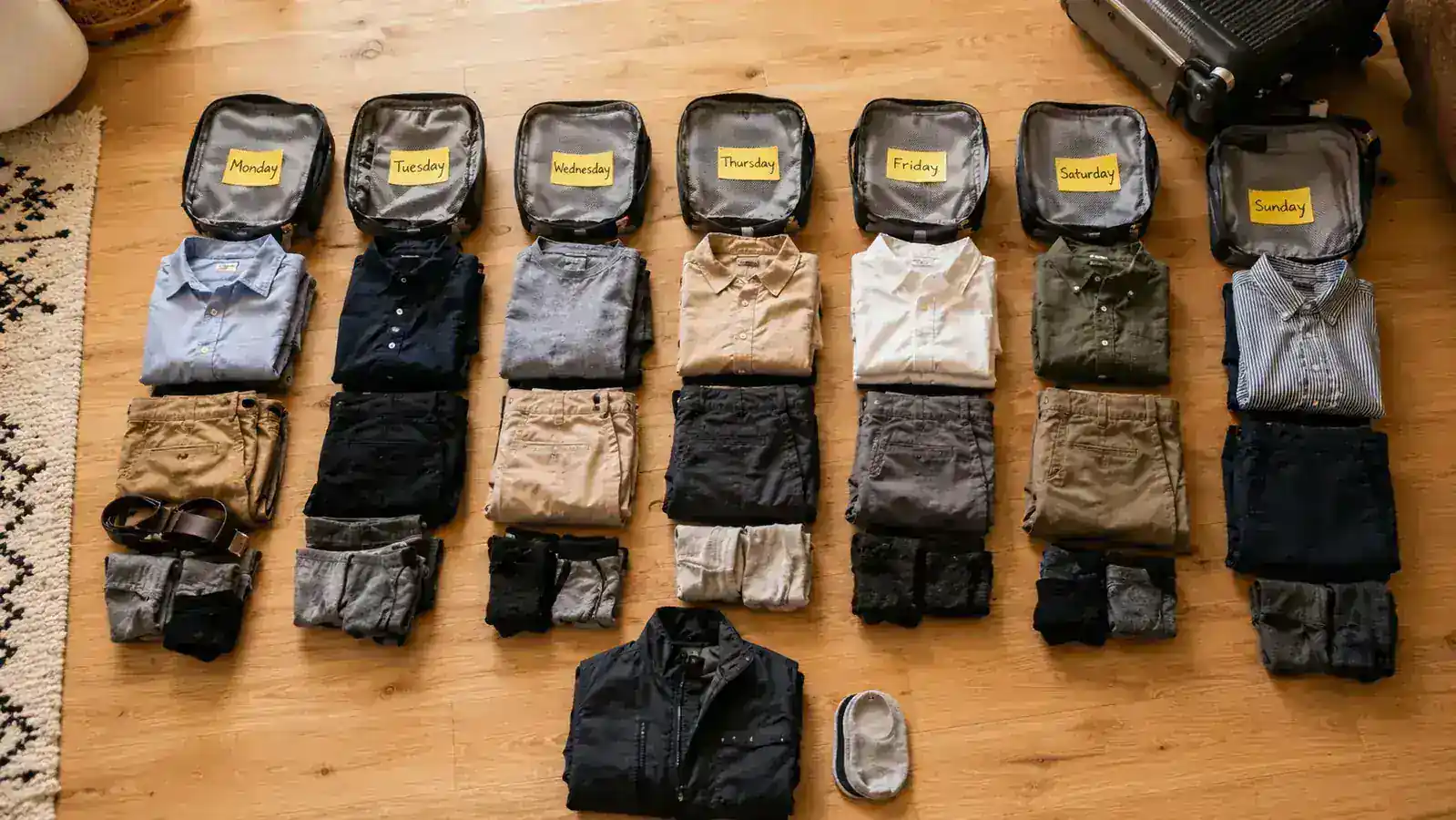
Most people start packing by opening their bag. That is the wrong order. Open your closet, pull out what you think you need for the trip, and lay it flat on your bed. All of it. Do not edit yet. Just look at the pile.
For a seven-day trip, a working baseline looks like this: 5 tops (not 7, I will explain why), 3 bottoms that mix and match, 7 days of underwear, 4 pairs of socks, 1 lightweight layer, 1 going-out outfit if the trip calls for it, and 1 pair of shoes you are wearing on the plane. That is the target pile before you touch a single cube.
The reason 5 tops instead of 7 is that tops are the thing people over-pack most. You can hand-wash a top in a hotel sink in three minutes and hang it to dry overnight. You cannot do that with jeans. Bottoms are the load-bearing garments. Tops are the variables. Five is plenty for seven days if you are mixing patterns and neutrals intentionally.
Step 2: Assign Every Category to a Specific Cube Size
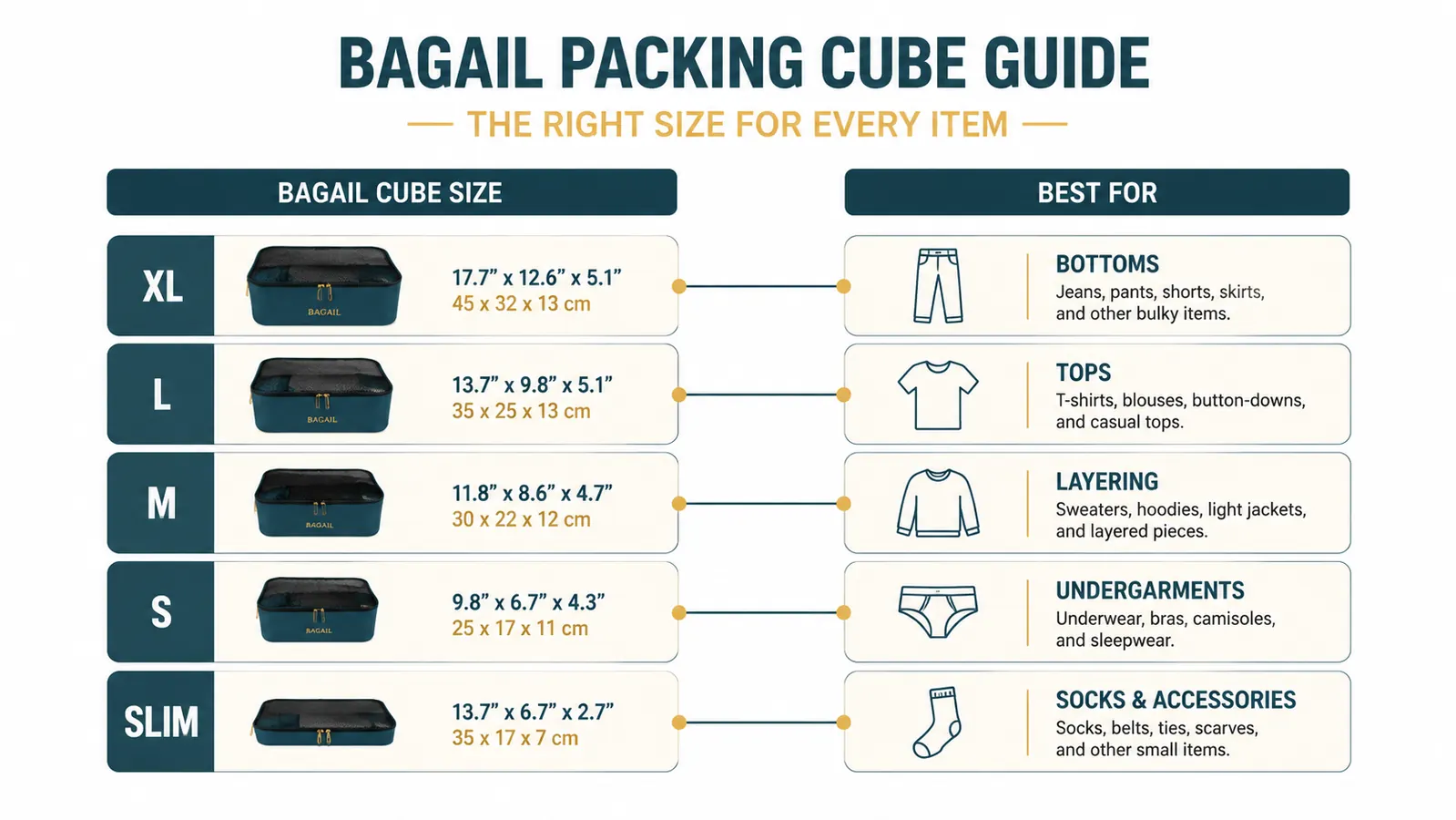
This is where the BAGAIL 8-set earns its place. The set gives you eight cubes across five sizes: one XL, two Large, two Medium, two Slim, and one Small. The reason this matters is that when each category lives in its own dedicated cube, you never dig through a bag looking for a clean shirt at midnight in a hotel room you do not know.
Here is how I assign the BAGAIL sizes for a seven-day trip. The XL cube holds bottoms: 3 pairs of pants or a mix of pants and skirts, folded lengthwise and stacked flat. The two Large cubes hold tops: one cube for travel days and casual out-and-about shirts, the other for going-out tops or anything that needs to stay less wrinkled. I keep a layer of tissue paper in the second large cube for the nicer pieces. The two Medium cubes split between workout or beach clothes and a lightweight jacket or cardigan that can be compressed. The two Slim cubes are lifesavers for what I call the flat items: socks in one, bras and undergarments in the other. The Small cube handles the stragglers: a hair tie, a packable rain shell, a lightweight scarf.
You do not have to use all eight cubes on every trip. For a three-day weekend I typically use four. But having the full set means you are never wishing you had one more.
Step 3: Fold, Do Not Roll (Except for One Category)
The fold-vs-roll debate on packing forums generates more heat than it deserves. Here is the practical answer. Fold flat into packing cubes. The cube is the compression device. Rolling clothes before placing them in a cube takes up more vertical space and leaves the cube lumpy, which means it does not stack cleanly with other cubes in your bag.
The one exception is athletic wear. Gym leggings, a sports bra, a running shirt: those can be rolled tightly because they are stretchy and the wrinkles do not matter. Putting them rolled into the Medium cube lets you cram more in without the fold lines that synthetic fabrics hate.
For dress pants, blazers, or any structured fabric, do the fold-into-thirds lengthwise, then fold across the middle once. Place them directly into the XL or Large cube face-down so the fold crease ends up at the bottom and gravity helps smooth it during transit. It sounds overly specific but it makes a real difference when you pull out a pair of trousers at your destination.
The cube is the compression device. Rolling clothes before placing them in a cube takes up more vertical space and leaves the cube lumpy, which means it does not stack cleanly with the others.
Step 4: Load the Bag in the Right Order
The order in which you place filled cubes into your carry-on controls both total capacity and how easy it is to get to things at security or at your hotel. Heavy cubes go flat against the back panel, which is the panel that sits against the overhead bin wall or on the ground when the bag is standing upright.
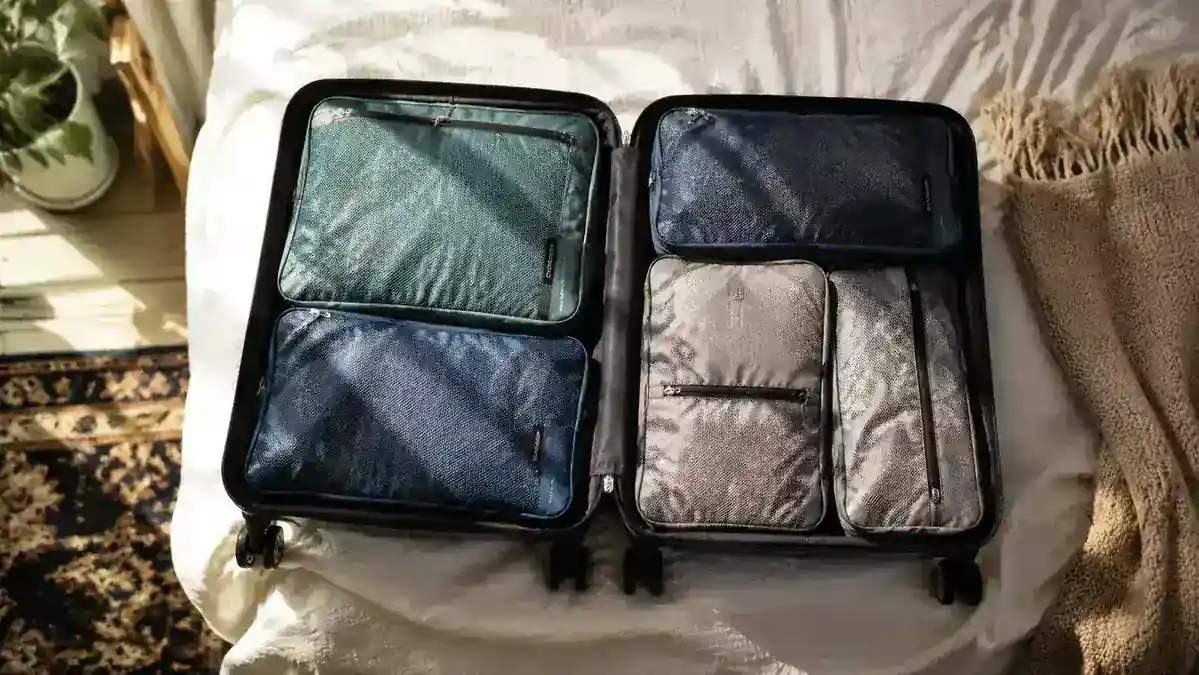
My loading order for a 22-inch carry-on: XL cube (bottoms) flat against the back panel first. The two Large cubes stacked on top of the XL, side by side. The two Medium cubes placed on top of and around the Large cubes, using them to fill any gaps at the edges. The Slim and Small cubes go last, tucked into the front compression pocket or the mesh internal pocket if your bag has one. The front exterior pocket of my carry-on holds the Small cube plus my toiletries bag and any documents I need mid-flight.
Loaded this way, a 22-inch bag with 37-40L of usable capacity comfortably holds the full seven-day clothing loadout I described in Step 1, with enough room left for toiletries in a quart bag, a pair of flat shoes or sandals wedged down one side, and a small first aid kit. I know this sounds like a magic trick. It is not. It is just cube discipline and using all five dimensions of your bag instead of just piling things in from the top.
Step 5: Close the Bag Without Forcing It
If you have to sit on your bag to zip it, something is wrong. Either you packed too much, or you loaded the cubes in the wrong order and they are fighting the bag's curved interior. A carry-on bag that is jammed will not pass a Spirit or Frontier gate sizer, even if the dimensions are technically compliant. Gate sizers measure rigid volume, not optimistic potential.
The test I use: after loading, try to zip the bag with one hand using normal zipper pressure. If the slider is straining, take out the last cube you placed and reposition it before putting it back. Nine times out of ten, one cube is sitting diagonally and wasting an inch of space along one edge. Reseat it flat and the bag closes cleanly.
One thing worth saying about the BAGAIL cubes specifically: the mesh top panel on each cube lets you see what is inside without opening it, which matters when you are reloading at a hotel mid-trip. You do not have to open every cube to find your running shorts. That visual ID feature sounds minor until you are doing it in a dark room at 5am before a flight.
What Else Helps
A few things that make this system work better beyond the cubes themselves. Wearing your bulkiest item on the plane is not a trick, it is required. Boots, a heavier jacket, chunky sneakers: those do not go in the bag. They go on your body. If you have a personal item allowance, that bag should hold your laptop, your day bag items, and anything fragile or valuable. The carry-on is pure clothing and toiletries.
For longer trips, a small travel laundry bag inside the XL cube handles the used-clothing problem. I use a mesh lingerie bag that I picked up for under three dollars. Dirty clothes go into the mesh bag, which goes back into the XL cube alongside the remaining clean bottoms. No mixing, no smell transfer, no hunting for what is clean. By day four on a seven-day trip, you will have enough clean space to fit comfortably. By day seven, you will be home.
If you want to go deeper on whether the BAGAIL set is the right choice for your specific travel style, or how it holds up after a year of washing and airport squeezing, the full long-term review is at the link below. And if you are deciding between BAGAIL and Eagle Creek, that comparison covers the $70 price gap honestly.
Internal link: BAGAIL 8-Set Packing Cubes: One Year of Real Use | BAGAIL vs Eagle Creek Pack-It: Is the Price Gap Worth It
The cubes that make this whole system click into place are the ones with the full size range.
The BAGAIL 8-set covers XL through Small, and both Slim cubes for flat items. It is the most complete set at this price point, and the reason I keep recommending it to anyone who asks how I fit seven days into one bag.
Amazon Check Today's Price on Amazon →