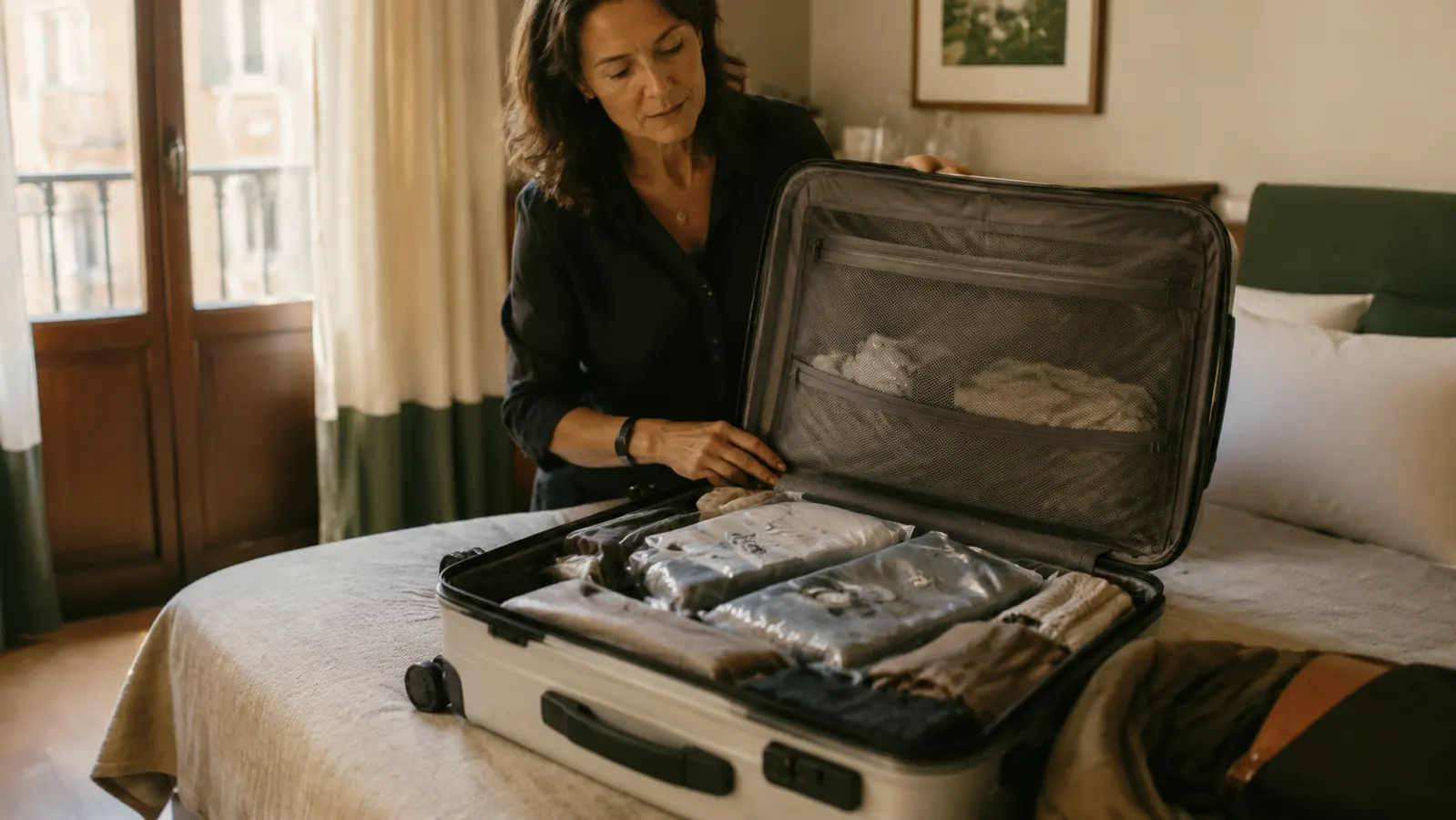
I packed for 11 days in Iceland in a single 22-inch carry-on. Two wool sweaters, a fleece mid-layer, a down jacket, waterproof pants, and enough base layers to survive Reykjavik in October. My secret was not some extreme packing discipline. It was a six-dollar pack of Amazon Basics vacuum storage bags and ten minutes of rolling on my bedroom floor. Before you dismiss this as gimmick territory, let me show you the ten specific situations where these bags actually earn their keep.
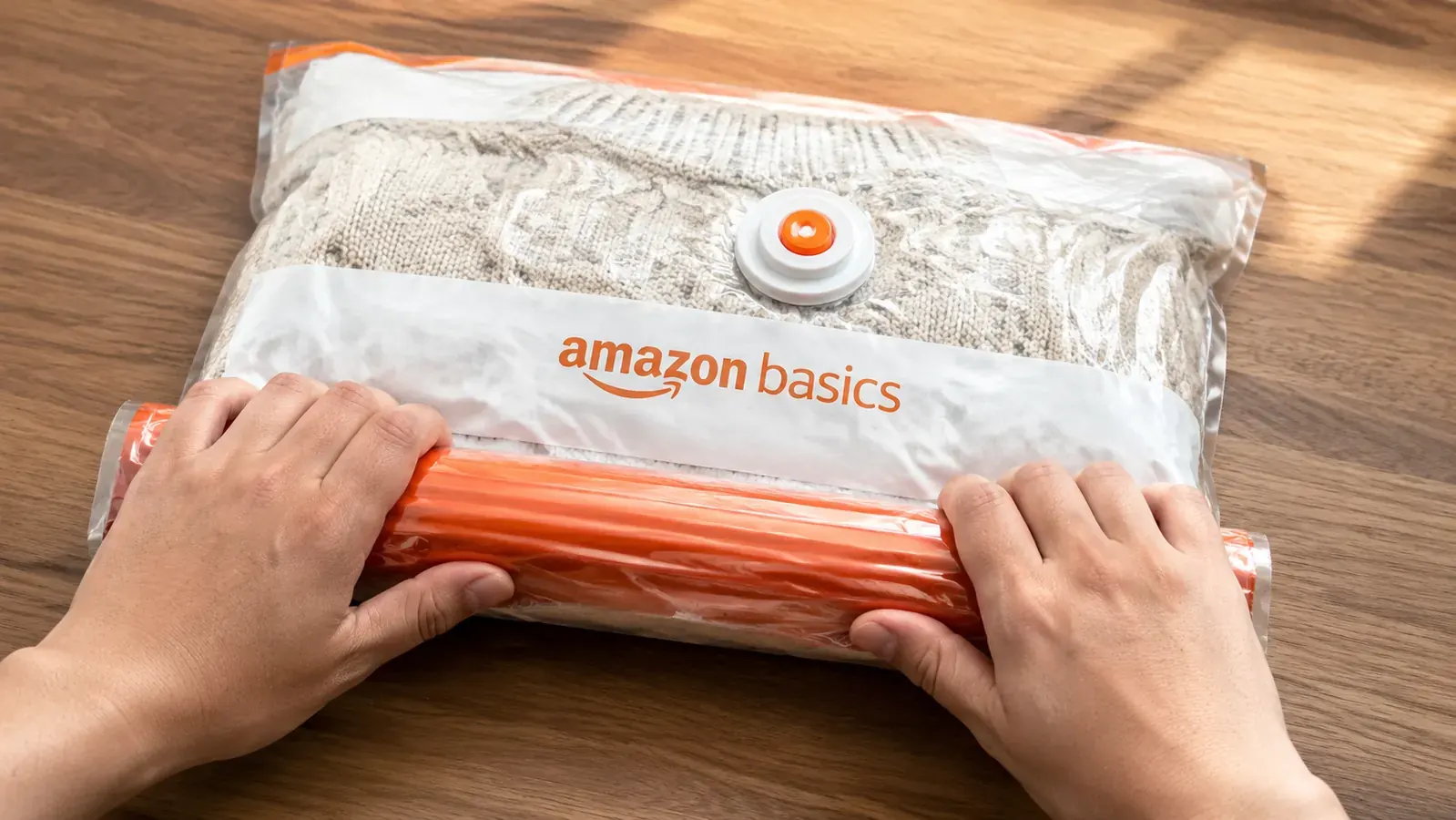
The Amazon Basics version (ASIN B07RSCPH4N, around $10 for a multi-pack) uses a simple double-zip seal and a roll-up valve that needs no pump. You seal the bag, roll from the bottom, and the air bleeds out through the one-way valve. No hardware store pump required. Over 89,000 Amazon reviewers have tested them, and the 4.4-star rating holds up. Here are the ten ways I actually use them.
The $10 fix that kept my Iceland wardrobe out of checked baggage
Amazon Basics vacuum storage bags. Double-zip seal, no pump needed, rolls flat in your suitcase. Over 89,000 reviews and the seals still hold after a dozen trips.
Amazon Check Today's Price on Amazon →Compressing a Down Jacket Into a Fraction of Its Size
A packable down jacket in its own stuff sack still takes up a third of a small carry-on. Slide it into a medium Amazon Basics vacuum bag instead, zip the seal, roll out the air, and you get something roughly the size and thickness of a hardback book. I use this every time I fly somewhere cold and need the jacket for the plane but not the overhead bin fight. On the Iceland trip, my Arc'teryx Cerium sat in a vacuum bag inside my bag and weighed practically nothing.
Amazon See the Amazon Basics bags →Fitting Three Sweaters Where One Used to Live
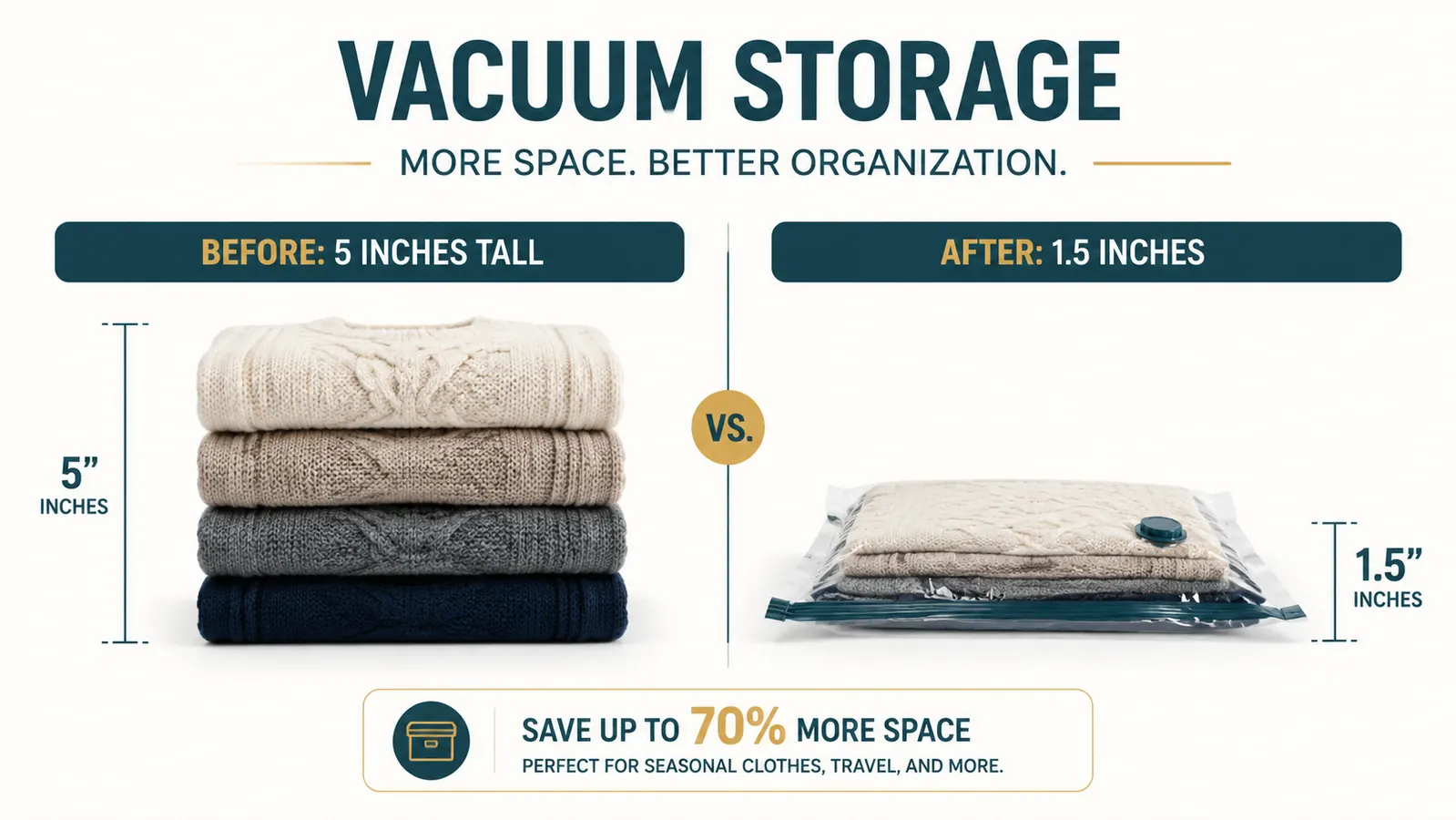
Sweaters are carry-on killers. They fold into a reasonable square and then somehow consume the entire suitcase anyway. Three medium-weight wool or cotton sweaters compressed in a large vacuum bag go from a five-inch stack to about an inch and a half. That is not an exaggeration. I measured it in my kitchen before my Scotland trip last November. You gain the equivalent of a full packing cube's worth of space, just by removing the air.
Amazon Pick up the Amazon Basics bags →Packing Return-Trip Dirty Laundry Flat
Dirty clothes are the unspoken reason people check bags on the way home. Everything is wrinkled, slightly damp, and somehow larger than it was going in. I use a vacuum bag for return-trip dirty clothes instead of a stuff sack. Roll the air out and the dirty pile compresses to the same footprint it had clean. The seal keeps the smell contained, which your carry-on neighbors appreciate. I started doing this on trips over five days and it changed the math completely.
Amazon Check today's price on Amazon →Making a Beach Trip Work Without a Duffle
Cover-ups, pareos, flip-flops, a rash guard, two extra swimsuits, a beach towel. Beach trips are bulky in a low-density way. Everything is lightweight but takes up enormous volume. A large vacuum bag handles towels and cover-ups beautifully. The compression is dramatic because there is so much air between the fabric layers. I packed for a week in Tulum last year with only my 21-inch carry-on by vacuum-sealing the beach layer separately from the going-out layer.
Amazon See the Amazon Basics bags →Keeping a Formal Outfit Separate and Wrinkle-Free
Business travel with a presentation or dinner means a blazer, dress pants or a dress, and a blouse or shirt that cannot arrive destroyed. I lay these flat in a large vacuum bag and compress only to about half pressure, not full roll-out vacuum. The clothes stay separated from the rest of the bag, which prevents travel grime from transferring onto the good stuff, and the partial compression keeps them from shifting and wrinkling the way they would loose in the suitcase.
Amazon Shop the Amazon Basics bags →Extending a Carry-On Trip From Five Days to Ten
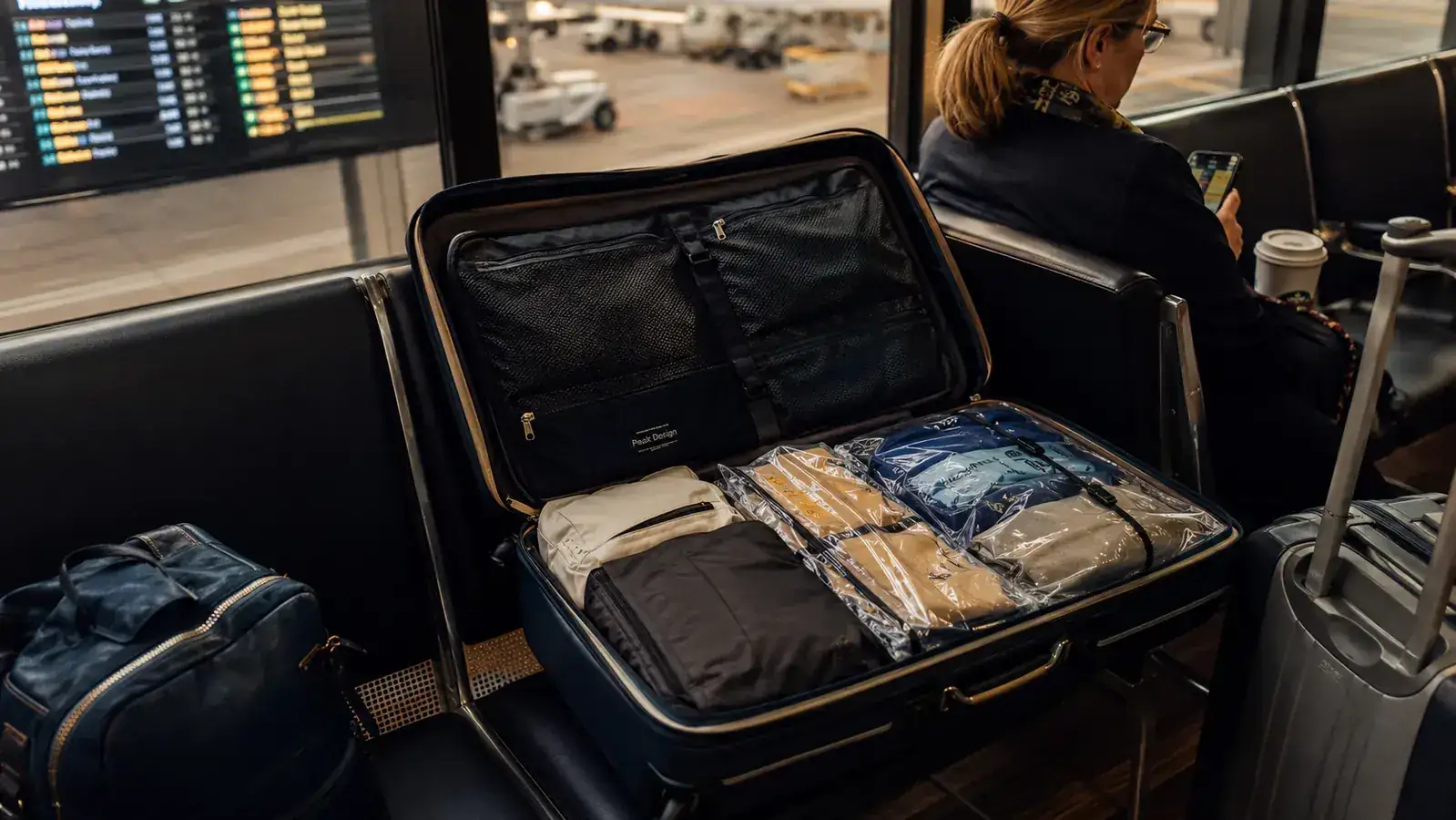
The math breaks down around day five for most carry-on travelers. You run out of suitcase before you run out of trip. Vacuum bags let you pack a 10-day trip by compressing the bulkier layers, sweaters, fleeces, pajamas, into flat slabs and using the freed space for the everyday items that need to stay accessible. I have done two-week trips in Europe this way, rotating through the compressed layers as I needed them and re-sealing dirty items for the return.
Amazon Check today's price on Amazon →Solving the Ski or Snow Trip Problem
Ski trips are notoriously hard to do carry-on. The thermal layers alone are substantial. I use two medium Amazon Basics bags for ski-trip packing: one for the base layers and mid-layer (fleece, thermal pants, thermal top), one for the puffy jacket or vest. Ski pants, if you need them, compress surprisingly well. Yes, you will need to rent ski boots or ship them ahead. But the clothing side of a ski trip is very manageable with aggressive vacuum compression and a bit of planning.
Amazon See the vacuum bags on Amazon →Packing Blankets or Extra Pillows for Long-Hauls
I carry a lightweight travel blanket for long overnight flights. Uncompressed, it fills half my personal item bag. In a small Amazon Basics vacuum bag, it rolls down to the size of a thick paperback novel and fits in the side pocket of my carry-on. Same goes for a travel pillow if yours is the compressible kind. The point is not just clothes. Anything with trapped air, blankets, pillows, thick socks bunched together, benefits from vacuum compression.
Amazon Pick up the Amazon Basics bags →Separating Clean From Clean: Two Outfits, One Bag
On trips where I need genuinely different wardrobe categories, say a city exploration wardrobe and a hiking wardrobe, I bag each category separately. The hiking layer goes in one vacuum bag, compressed and stowed in the bottom of the suitcase. The city clothes stay loose in packing cubes and stay accessible. When I hit the hiking portion of the trip, I swap them. I pull the hiking bag out, decompress it, and re-seal the city clothes. It sounds overthought but it takes about four minutes and eliminates the mid-trip repacking chaos.
Amazon See the Amazon Basics bags →Buying Clothes on the Trip Without Checking the Bag Home
You bought a sweater in Copenhagen. Or a linen shirt in Lisbon. Or a thick wool blanket at a market in Morocco. Normally that means the overhead bin math stops working on the return trip. With a vacuum bag and a slightly ruthless edit of what you already own, you can almost always make room. Compress everything soft, shove the new purchase in loose, roll out the air on the vacuum bag and you have recaptured the space. I have been doing this for years and it still feels like a trick every time it works.
Amazon Check today's price on Amazon →What I Would Skip
Vacuum bags do not work well on structured items, suits fresh from the dry cleaner, dress shirts that need to arrive pressed, or anything that will be destroyed by the compression. I also skip them for everyday basics I need to grab quickly: underwear, socks, toiletry overflow. The bags are for bulky soft items only. Do not try to compress jeans or structured denim, it does not compress much and you end up with a brick. And do not bother with the pump-required premium bags when you are traveling. You will not have a vacuum at the hotel.
Over 89,000 Amazon reviewers and they still rate the Amazon Basics bags at 4.4 stars. I have used the same set for a year and the seals have not failed once.
For a deeper look at exactly how to use these bags at the airport and in the hotel room, including the roll technique that gets the most compression without breaking the valve, read my full guide at how-to-use-vacuum-bags-for-carry-on-travel-no-pump. And if you want to compare vacuum bags against compression packing cubes for your specific trip type, the amazon-basics-vacuum-bags-review-long-term covers both in detail.
Ten trips worth of bulky clothes fit in one carry-on. These bags are how.
Amazon Basics vacuum storage bags. No pump, no hardware, no checked-bag fees. The multi-pack comes in at around $10 and the seals hold through repeated use. Over 89,000 Amazon customers agree.
Amazon Check Today's Price on Amazon →